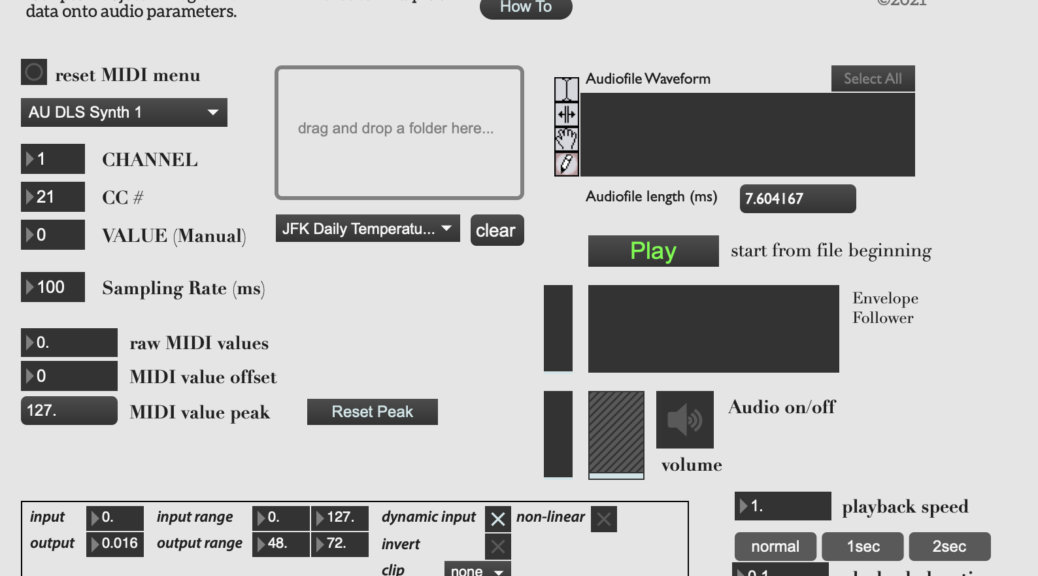
“Envelope Follower to MIDI CC” is a Max/MSP patch and stand-alone application for converting audio files into MIDI CC messages in real-time. Just load an audio file, play it, and you’ll be sending MIDI CC data based upon the amplitude envelope of the audio file. You have controls over MIDI data scaling, sampling rate, audio playback speed, and strict playback duration for mapping projects.
The impetus for the tool comes from not being satisfied with available options to convert audio amplitude into MIDI data for Digital Audio Workstation mapping projects. As a teacher, I wanted to create a resource to enable student mapping that leverages their own digital tools.
I made the software available as a repository on github. You don’t need to Max/MSP to run; I made a basic stand-alone application as well and the link is included on github.
If you dig the free software, please listen, share, and follow my music on Spotify.
Are streaming services ready for dynamic random-order concept albums?
Random Playback is a music album that explores using dynamically looped playback to generate a unique listening experience for your own device (and which never ends). The album leverages streaming technology to randomly playback material endlessly and aims to simultaneously test the boundaries of streaming services’ “gapless playback“ feature. Just hit shuffle, repeat, and play.*
*phone apps for Amazon Music and Apple services are the most seamless for shuffle playback.
UPDATE 9/21/21: While Spotify is seamless on chronological, non-shuffle playback, Spotify seems to falter if randomizing playback (confirmed by other users). Amazon Music Unlimited, however, seems to handle randomization playback well, nearly seamless (from the phone app). Apple Music also has seamless shuffle playback from the phone app. That said, any browser playback has terrible audio drops between songs on shuffle mode for all services.
The source material was generated and recorded with permission from playing an iOS clicker game, Rhythmcremental, created by Batta (Simon Hutchinson and Paul Turowski). Huge shout out to Simon and Paul. And do check out their game. It’s addictive.
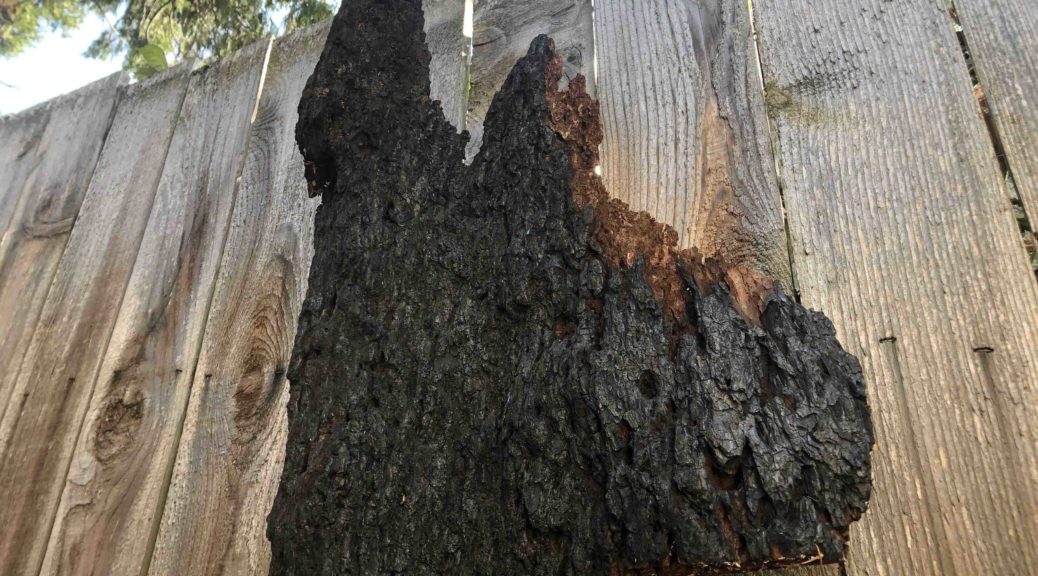
The creation of five sound sculptures centered around fire-affected areas of the 2020 Holiday Farm fire near Blue River, OR. The work was part of the Soundscapes of Socioecological Succession (SSS) project that was funded through a Center for Environmental Futures, Andrew W. Mellon 2021 Summer Faculty Research Award from the University of Oregon.
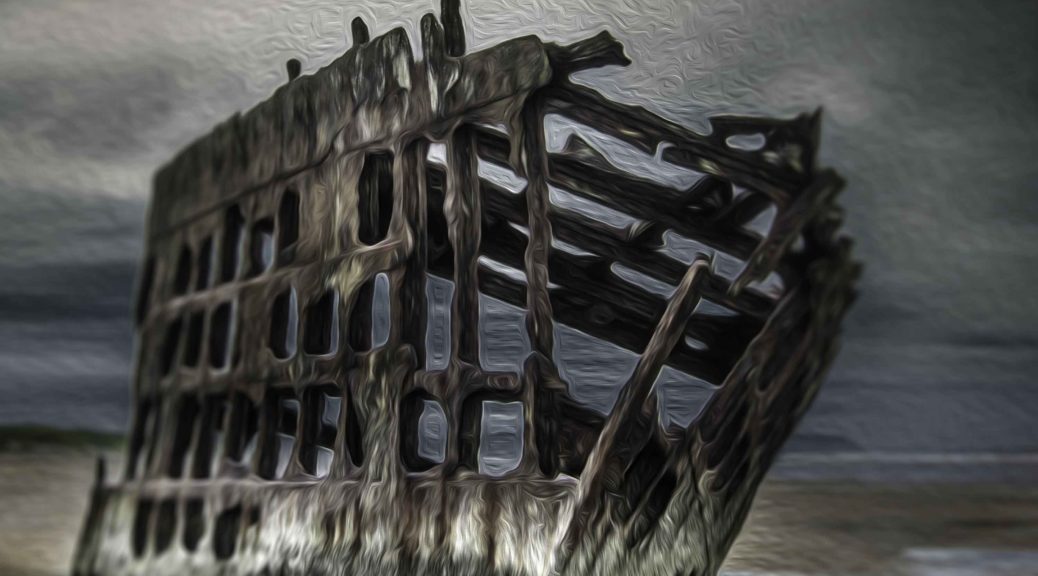
Sunken Shoreline (edited, mixed, and released 2021) captures a 2014 performance of climate-related tweets from around the world in realtime (#climatechange, #tarsands, #environment,fracking, #sustainable, among others), the year before the United Nations Educational, Scientific, and Cultural Organization (UNESCO) formed a “Charter for Sound” to emphasize sound as a critical signifier in environmental health. Mapping characteristics of these tweets to sonic parameters, users from around the world sound out a call for our climate. Here, an array of audio processing submerges these sonic voices under a technological deluge that suggests an Atlantian future should we choose to ignore the calls to action.
The competition awarded nine prizes in the areas of field recording, live performance, and sonification, and the competition “aims to discover and recognize new music and sound art focused on the theme of coastal futures.” Sunken Shoreline was one of two awarded in the Sonification category. Winners of the competition were from Norway/UK, Australia, Canada, Portugal, South Korea, and the US.
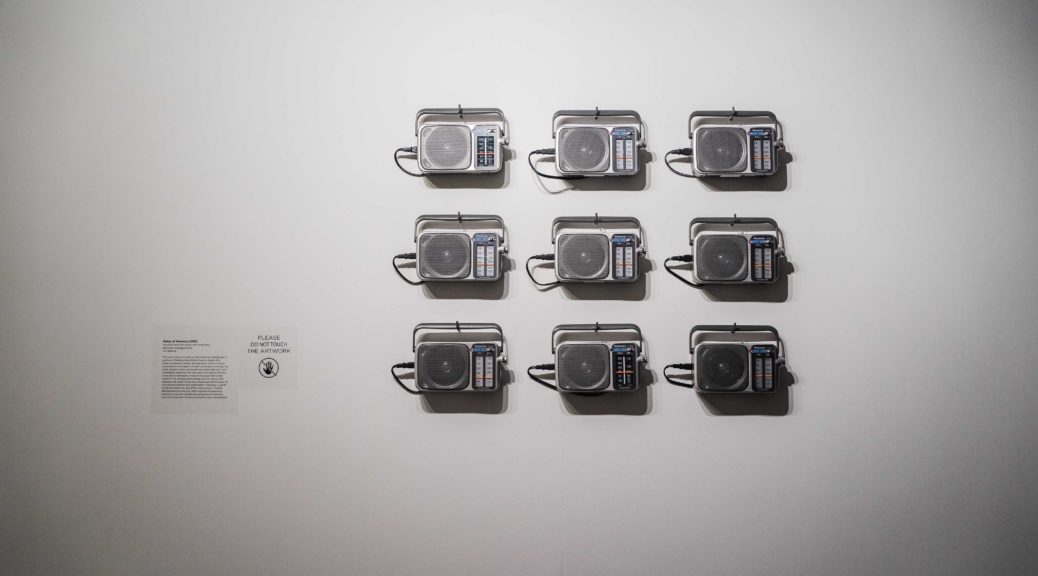
The sonic impact of radio on the Americana landscape is profound. Fireside chats, Radio theatre, Payola, DJs, drive-ins, elevator Musak, waiting room noise––the vast consumerism and reach of radio continues to this day. Yet, what happens when we smash two artists (Kenny G and Nickelback) together into one spectral stretched fantasy using the transmission medium that gave life to their careers? Are we doomed to phase out our history with background noise? Or are we undulating with the beat of cultural reclamation and signification? Sending us adrift inside the electrical coils of the radio, Lying in Fireflies Besides Brown Curls and other original compositions attempt to recount a personal connection to memory, lust, and the power of radio to receive a new transmission.
Relay of Memory was exhibited at the Edith Langley Barrett Art Gallery, Utica, NY. The exhibition was supported by funds from the Oregon Arts Commission.
Chromatic Shift is an audio plugin (AU and VST3) that uses three interpolating delays to pitch shift audio.
The range of the plugin is two octaves below and two octaves above the original audio.
A window delay (5ms to 50ms set outside playback) changes audio quality at more extreme settings. Default is 20ms.
Chromatic Shift was built using the JUCE Framework (C++).
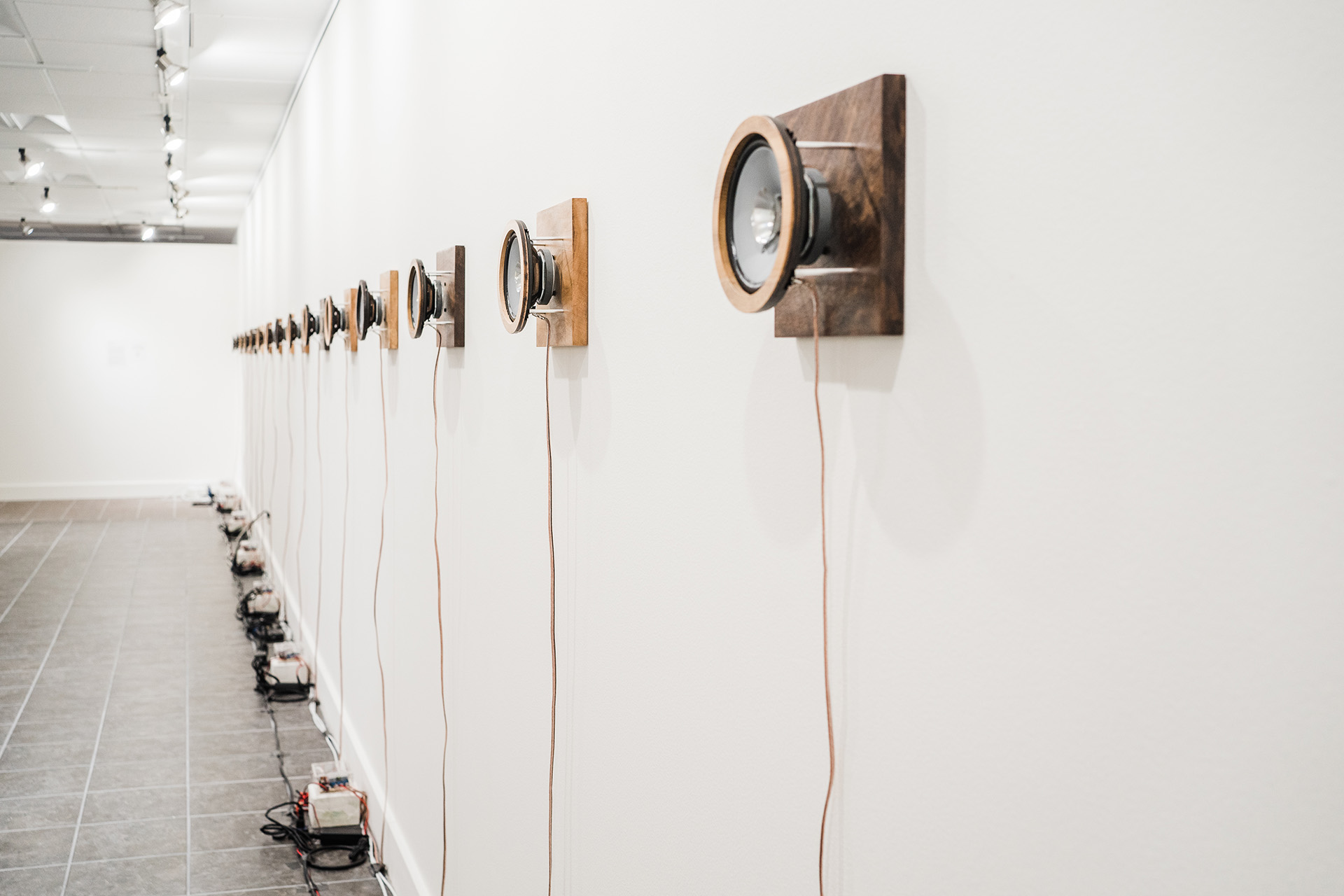
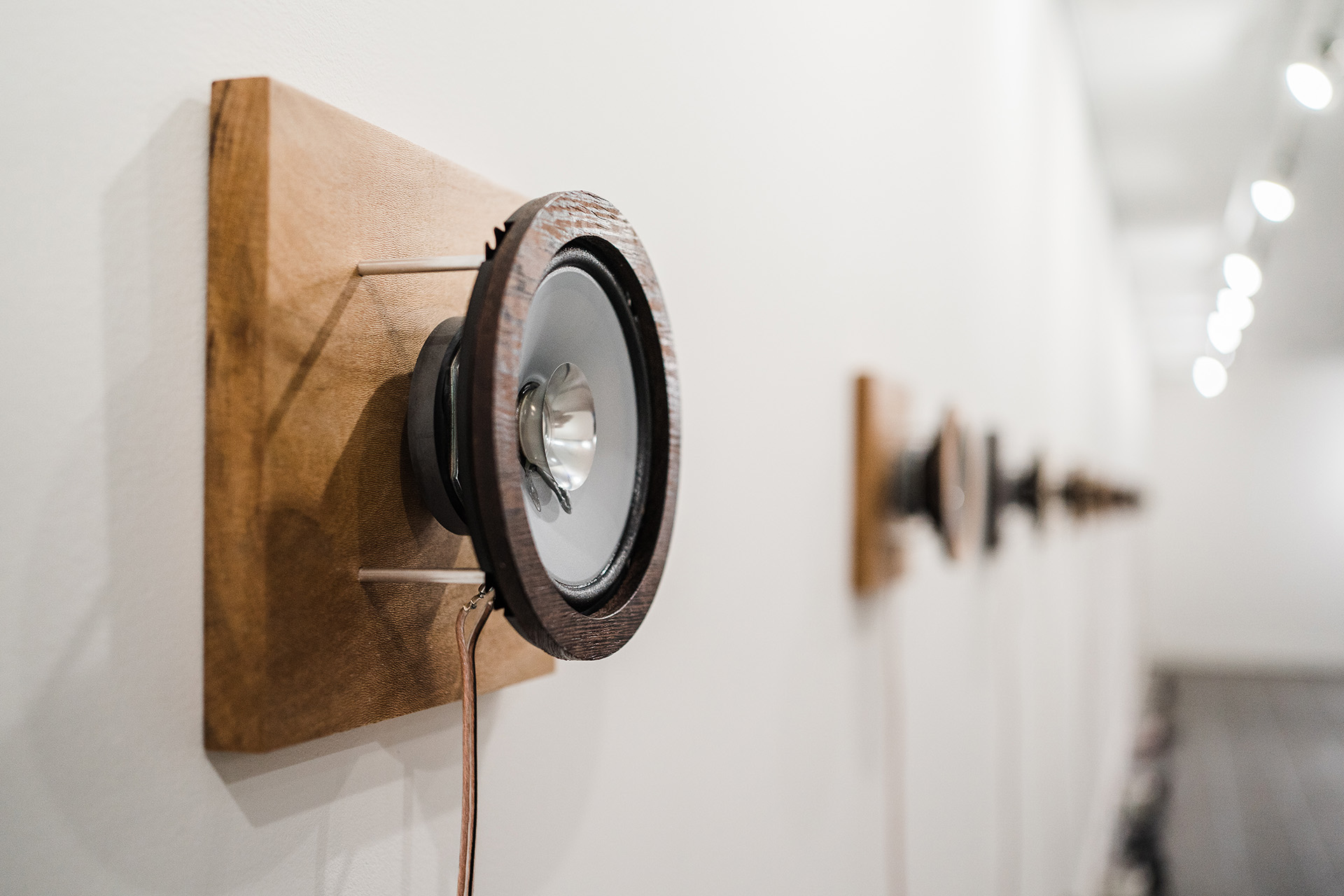
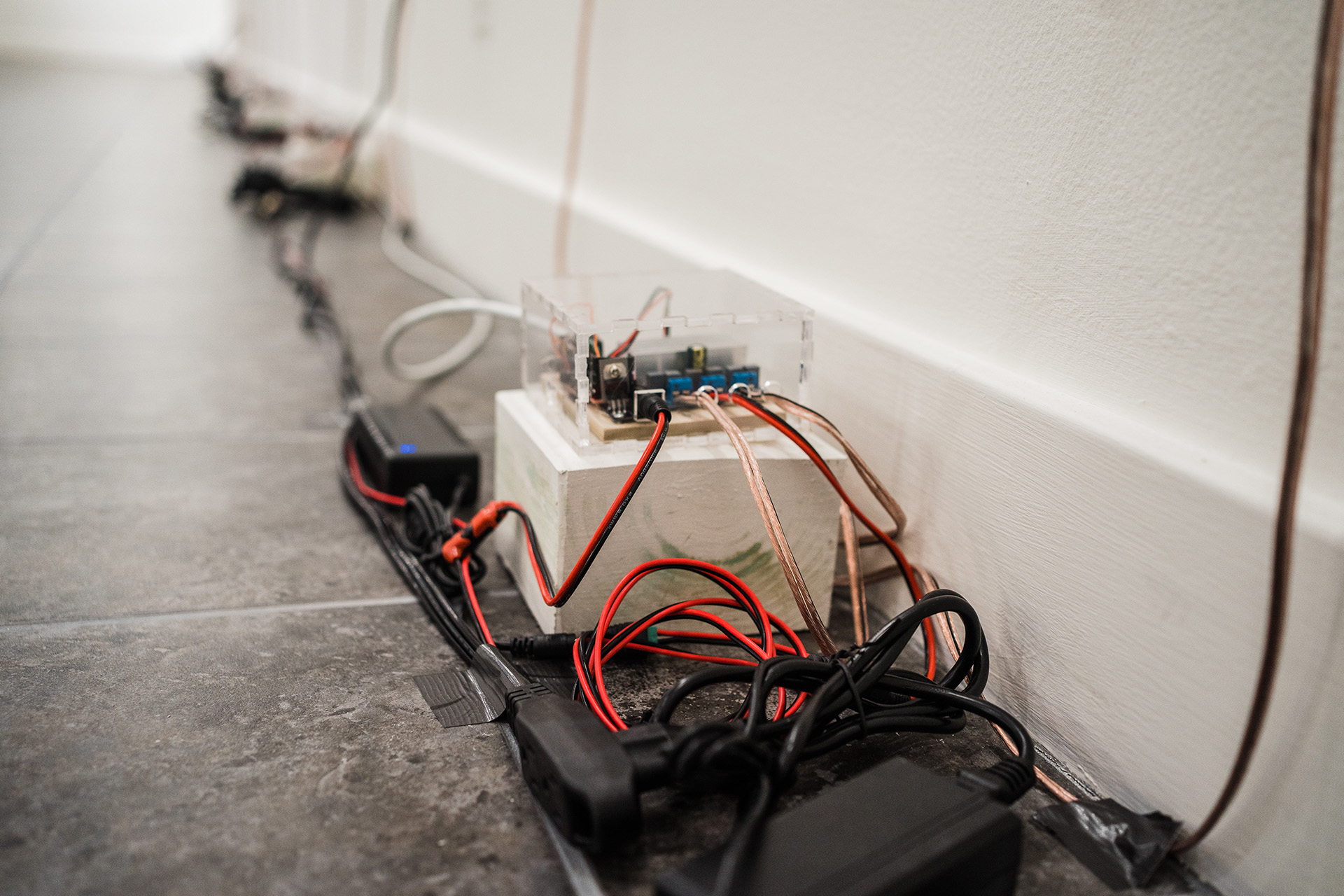
Wildfire is a 48-foot long speaker array that plays back a wave of fire sounds across its 48-foot span at speeds of actual wildfires. The sound art installation strives to have viewers embody the devastating spread of wildfires through an auditory experience.
The work was installed at the Edith Langley Barrett Art Gallery in Utica, New York. The work ran Sept. 19 – Dec. 8, 2019 as part of a solo art exhibition entitled, “Impact! works by Jon Bellona.” Wildfire was part of SPRING/BREAK Art Show in NYC March 3 – 9, 2020 curated by Megan C. Austin and Ashlie Flood.
Wildfire was made possible through the University of Oregon Center for Environmental Futures and the Andrew W. Mellon Foundation. The Impact! exhibition was supported by funds from the Oregon Arts Commission. Additional support made possible from the Edith Langley Barrett Art Gallery.
Public Final Report for University of Oregon Center for Environmental Futures.
I mixed-down the forty-eight foot, 16-channel work into stereo (2-channel). An embedded Spotify player is below, but the stereo version may be found on Apple, Amazon, YouTube or wherever you stream music.