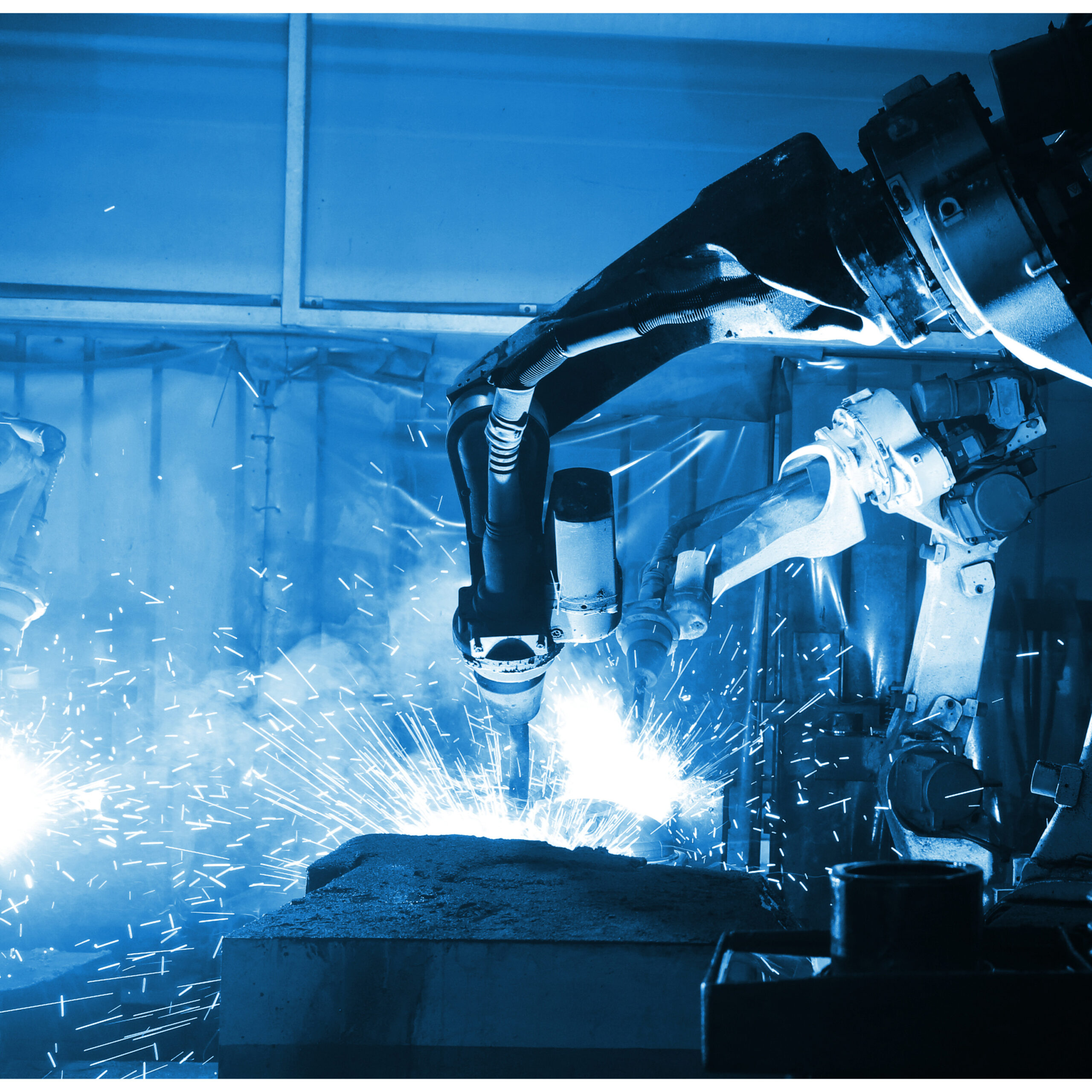
Sonny Champagne and the BillionAIres is a music project centered on documenting and amplifying the environmental rollbacks and irreparable harms being done on the American people through song. Executive Orders since the 47th president’s inauguration in January 2025 have rolled back significant environmental protections. The project aims to write a song for each executive order harming the environment.
Archives
Defensible Space
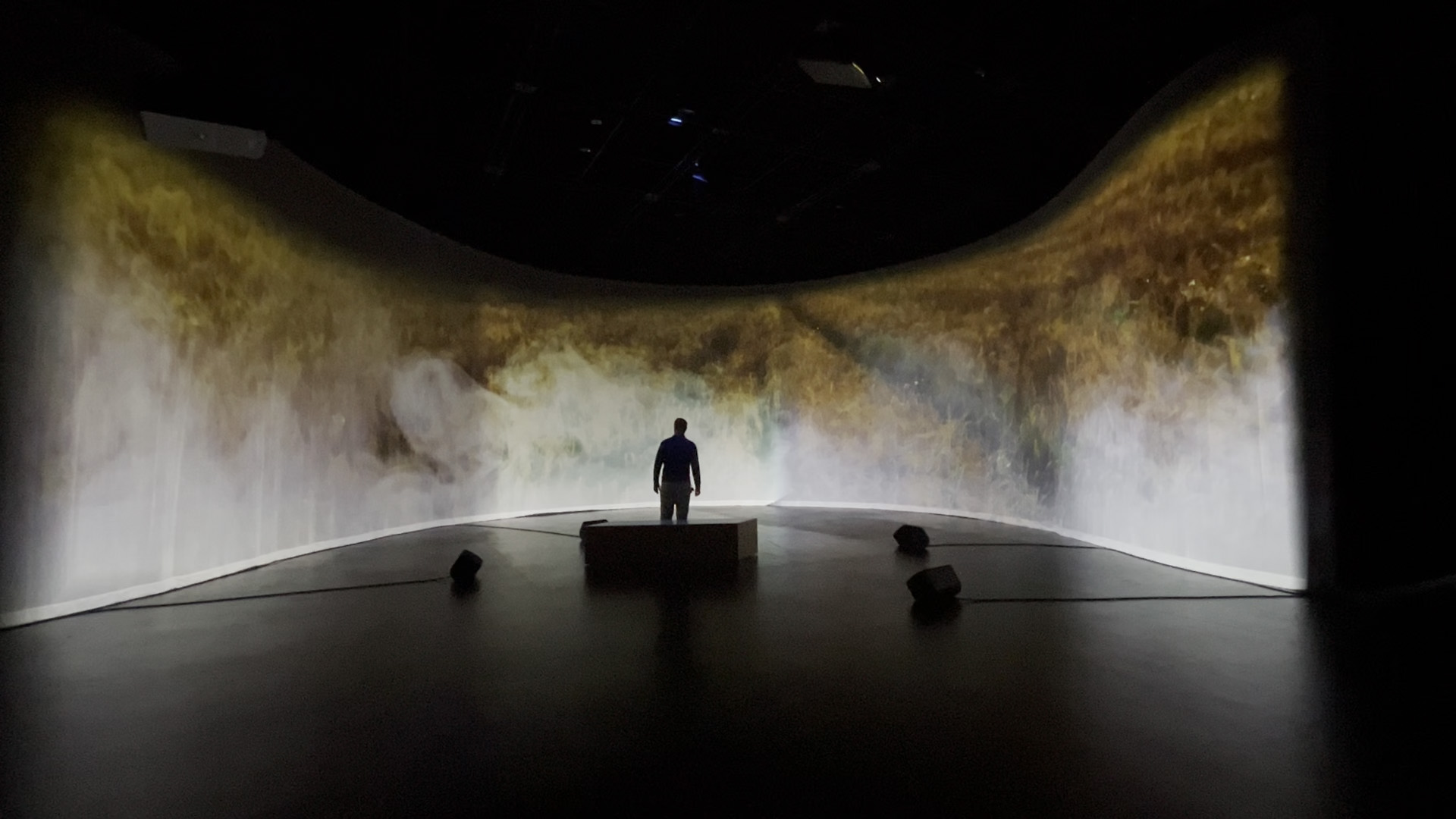
Defensible Space is a large-scale artwork that explores the raw and elemental power, effect, and impression of wildfire on human beings, and the landscape that we exist in. The experience transports participants to immersive, serene, and natural landscapes of the west, interrupted by destructive wildfire events that play back fire sounds at the speeds of actual wildfires. The multimedia work combines 24-channels of immersive spatialized audio and 270 degrees of 3D projection mapping to envelop visitors in a multi-sensory experience of the fire front.
24-channel audio by Jon Bellona.
3D video projection mapping by artist John Park.
Housed in the Oregon State University Patricia Valian Reser Center for the Creative Arts (PRAx) Ray Theater, PRAx commissioned the artwork for the 50’x60′ space. The work was shown from March 31 – April 11, 2026.
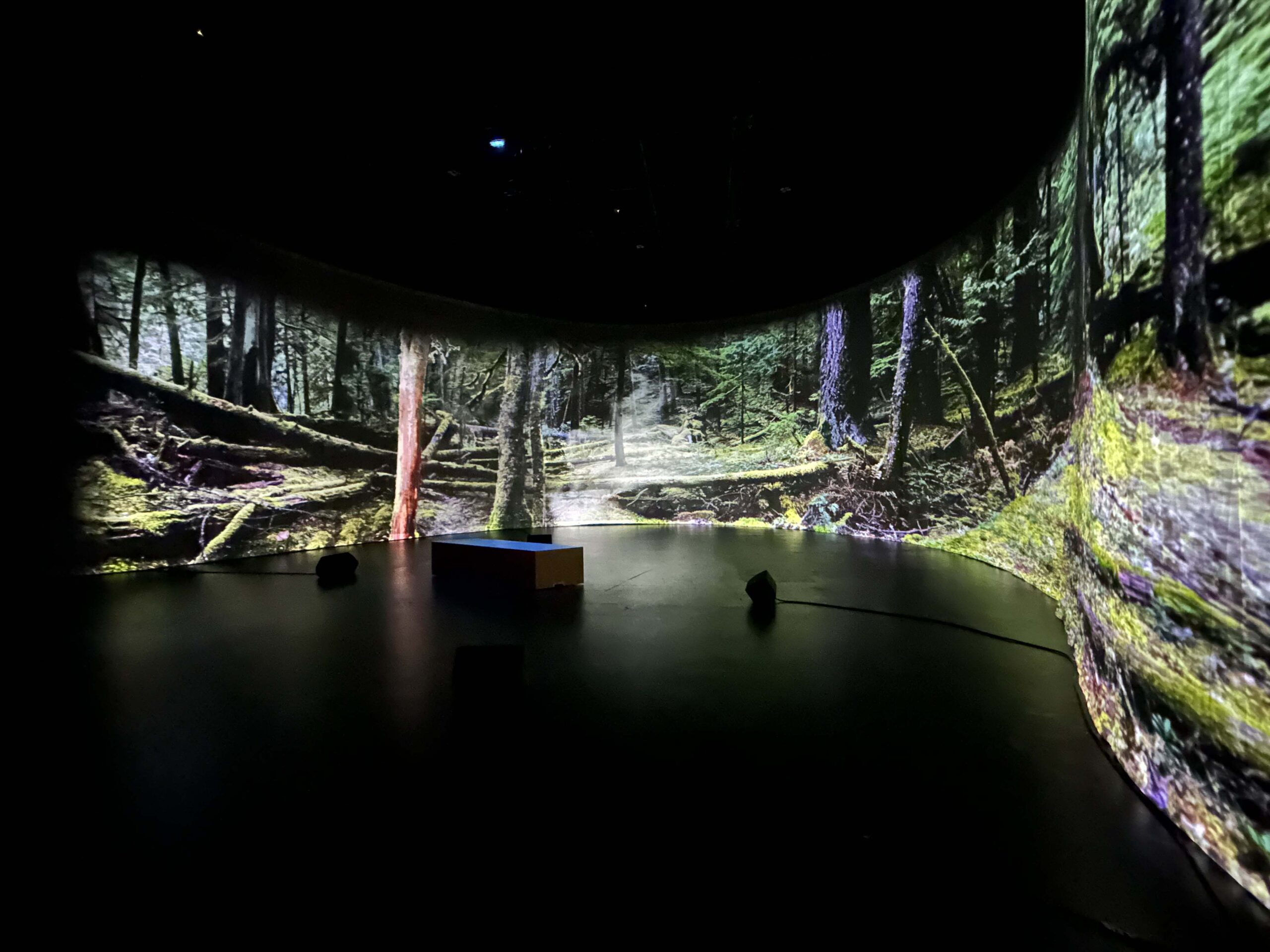
Technical details for audio and video: 24-channels of audio were 14 speakers on walls, 4 hung on the ceiling, 4 on the floor, and 2 subwoofers. The 90’ curved scrim (17’ tall) included 6000 x 1150 pixels image across 3 projectors (11000 lumen center. 8500 lumen projectors on sides). BrightSign media players were used for video playback and Max/MSP custom software played 24-channels of audio. Custom synchronization solutions came via custom software.

Heavy Impacts Vol. 1
Heavy Impacts Vol. 1 is part of the HD Music Now production library on the Lotus Trailer SFX label. The tracks are original sound designed trailer-ready impact hits. From risers and tension swells to reverberant impacts, there are over 100 thunderous hits punctuated by dramatic energy and surrounded by expansive space and tails.
Music for Media Sampler
A sampler of work for sync.
I specialize in digital technologies to transform data into sound and create art experiences. My music fuses electronic and acoustic elements that explore different ways of expression and storytelling.
I primarily work in electronic underscore and sound design.
Water in the High Desert
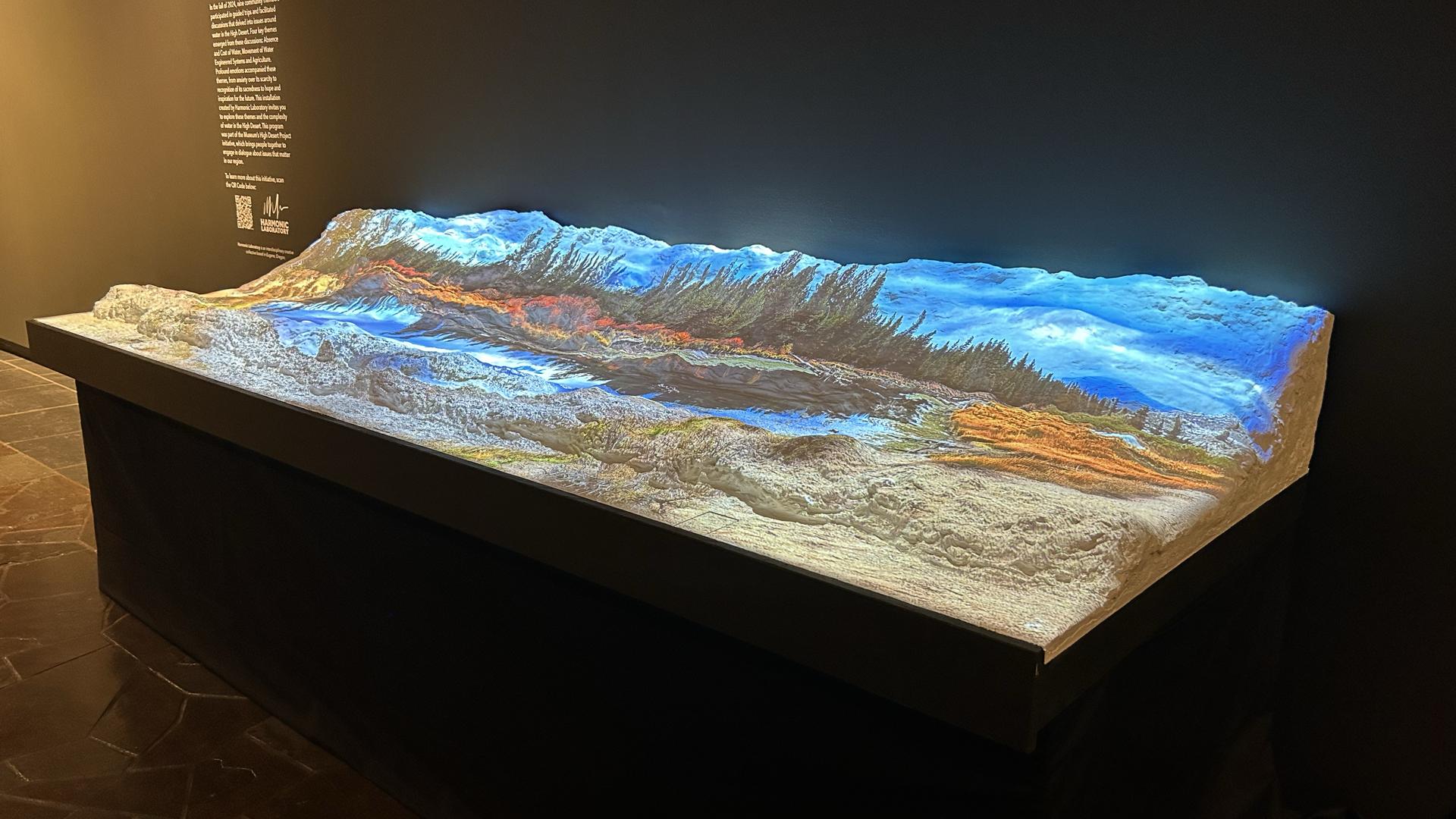
3D Sculpture with projection mapping and stereo audio. Commissioned by High Desert Museum, installed Nov. 2024 – Jan. 2025.
With dual-channel video content projected onto an expansive 9′ wide by 38″ deep three-dimensional sculpture, the work is a partnership between the High Desert Museum (Bend, OR) and Harmonic Laboratory (Eugene, OR) and highlights the complex issues of water usage in Central Oregon.
Harmonic Laboratory members on project: John Park (project lead, video, media playback); Karina Acuna (lead fabricator); Jon Bellona (stereo audio)
Sacrifice Zones: S.O.S.
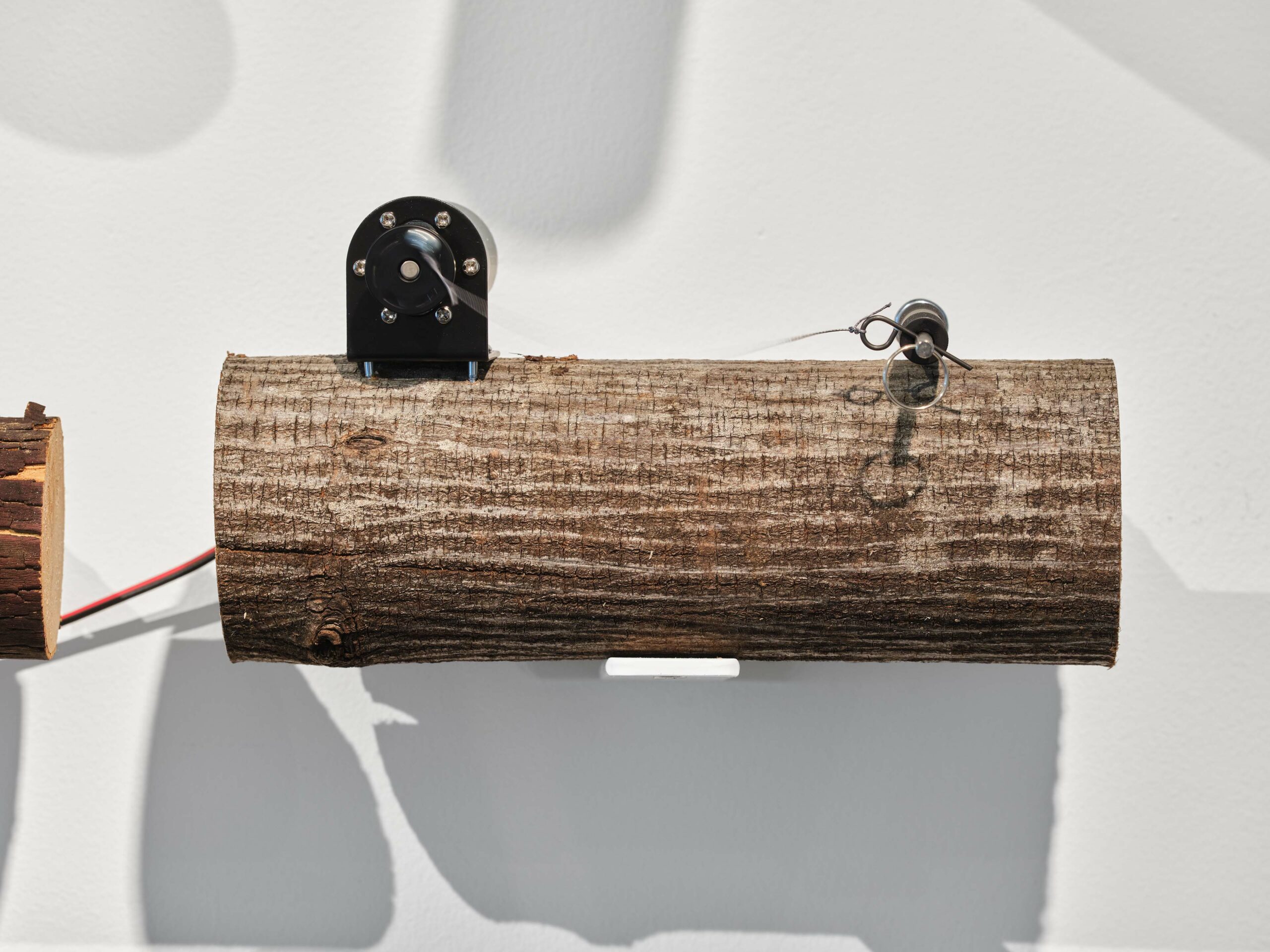
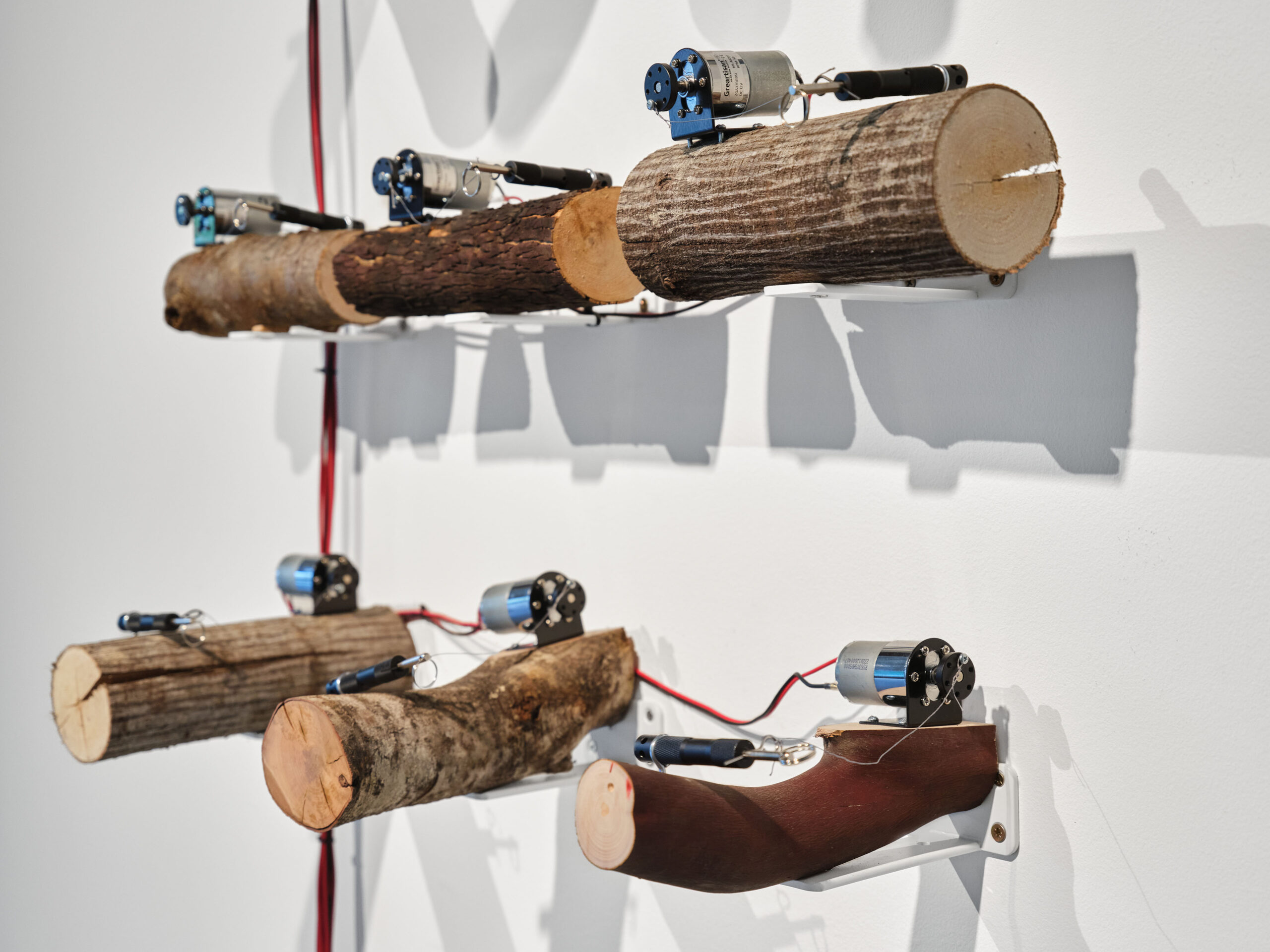
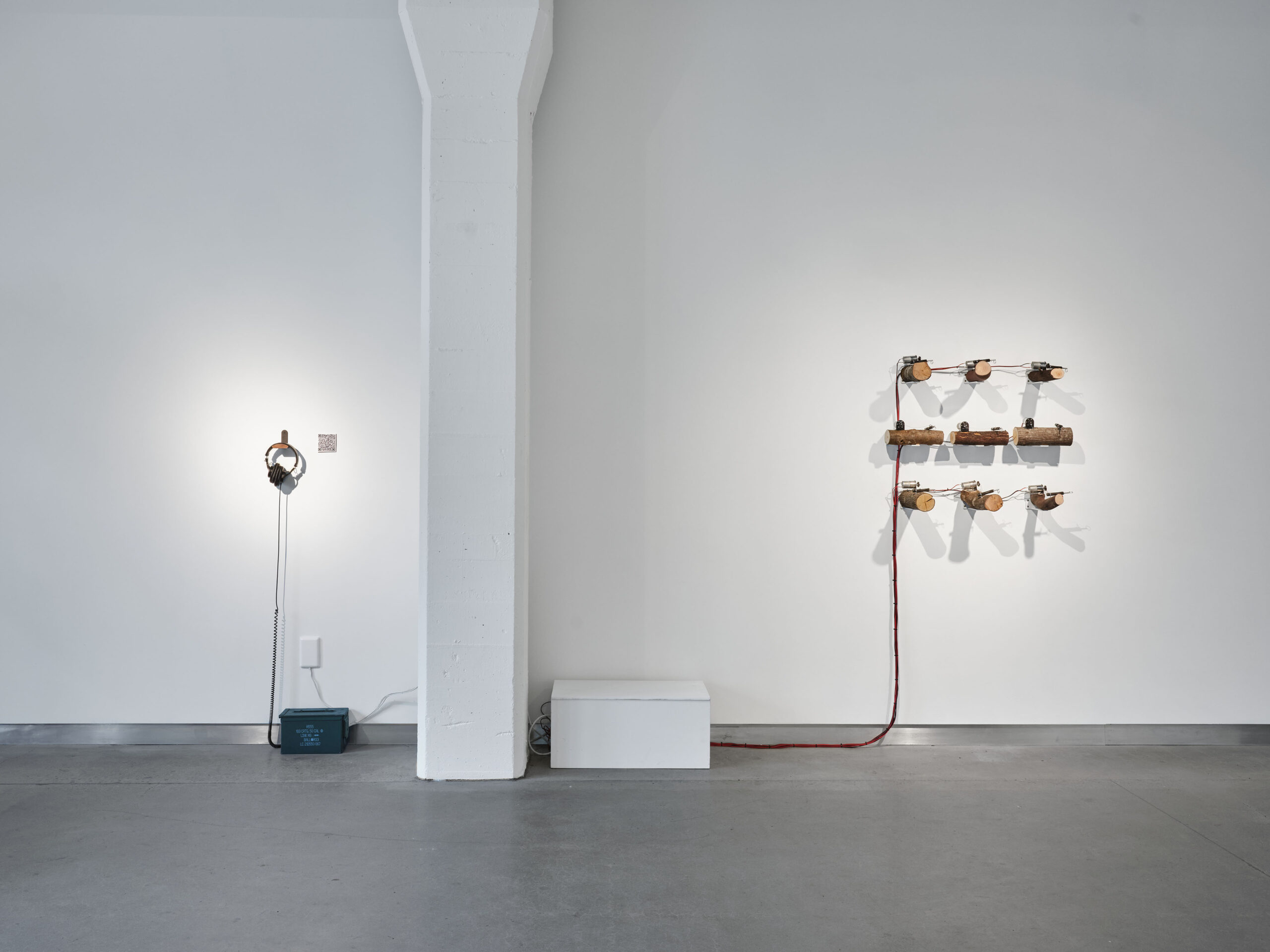
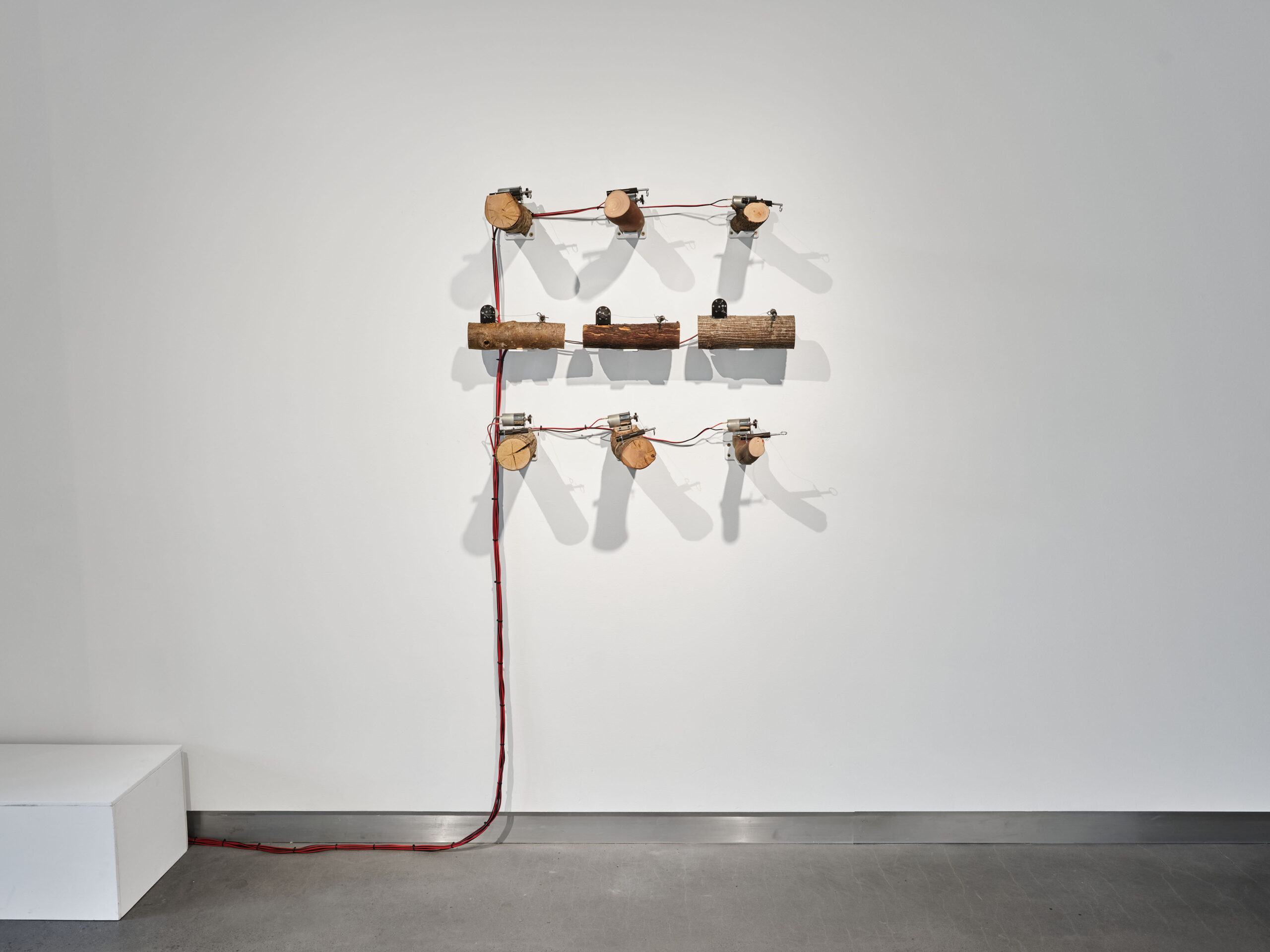
Consisting of nine DC motors, nine perimeter trip alarms, wood logs, and custom electronics, S.O.S. is a sound artwork that is a commentary on the Athabasca tar sands sacrifice zone; S.O.S. sounds our reluctance to listen or act on the destructive extraction methods of the oil & gas industry. DC Motors churn out an S.O.S. morse code distress call; the movements of which never quite activate the attached perimeter trip alarms. The distress call goes unanswered, speeding up to an eventual fever pitch before dissolving into a metronomic rhythmic pattern. These rhythms connote glossy artifacts of our reliance on bitumen byproducts, all of which are distractions to the methods of the extractive industry that permanently alter the environment.
The 2024 work was installed in 510 Oak Street, Eugene, OR as part of a Center for Art Research exhibition series Embrace Fearlessly the Burning World, organized by curators-in-residence Ashley Stull Meyers and Aurora Tang and made possible by the University of Oregon Department of Art’s Center for Art Research and the Ford Family Foundation. Photos by Adam DeSorbo.

Sacrifice Zones: Sonic Solutions
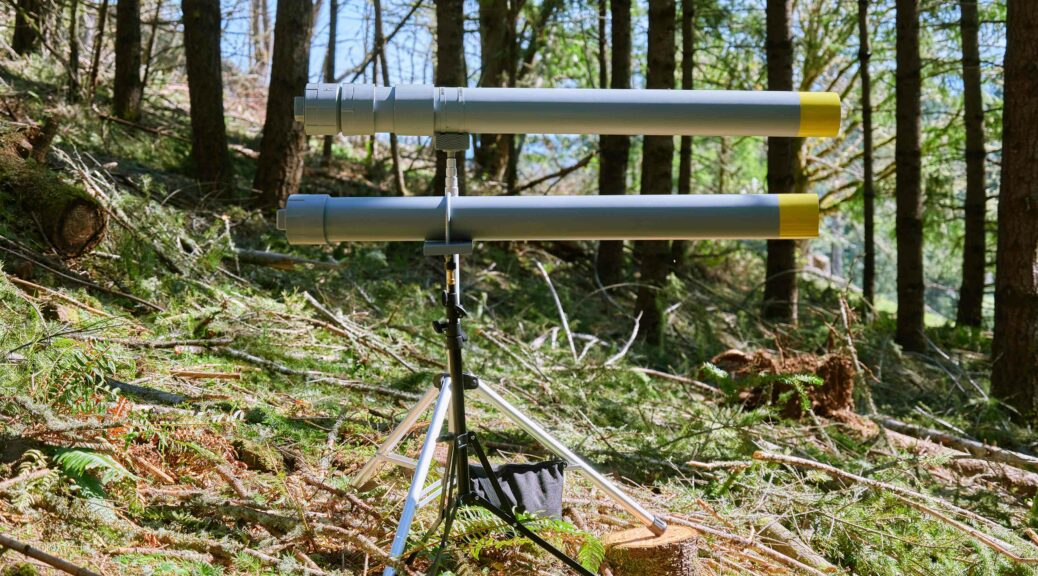
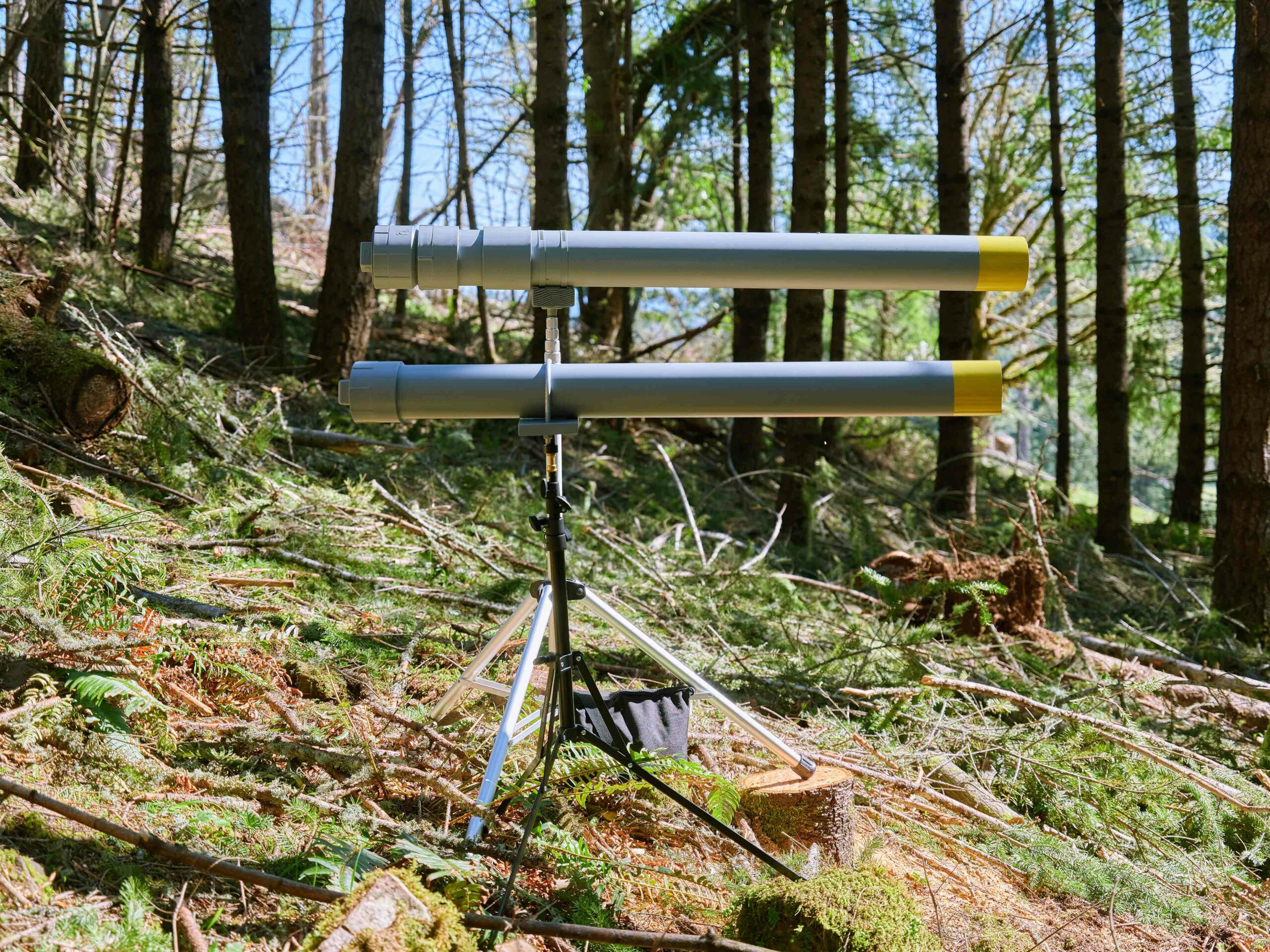
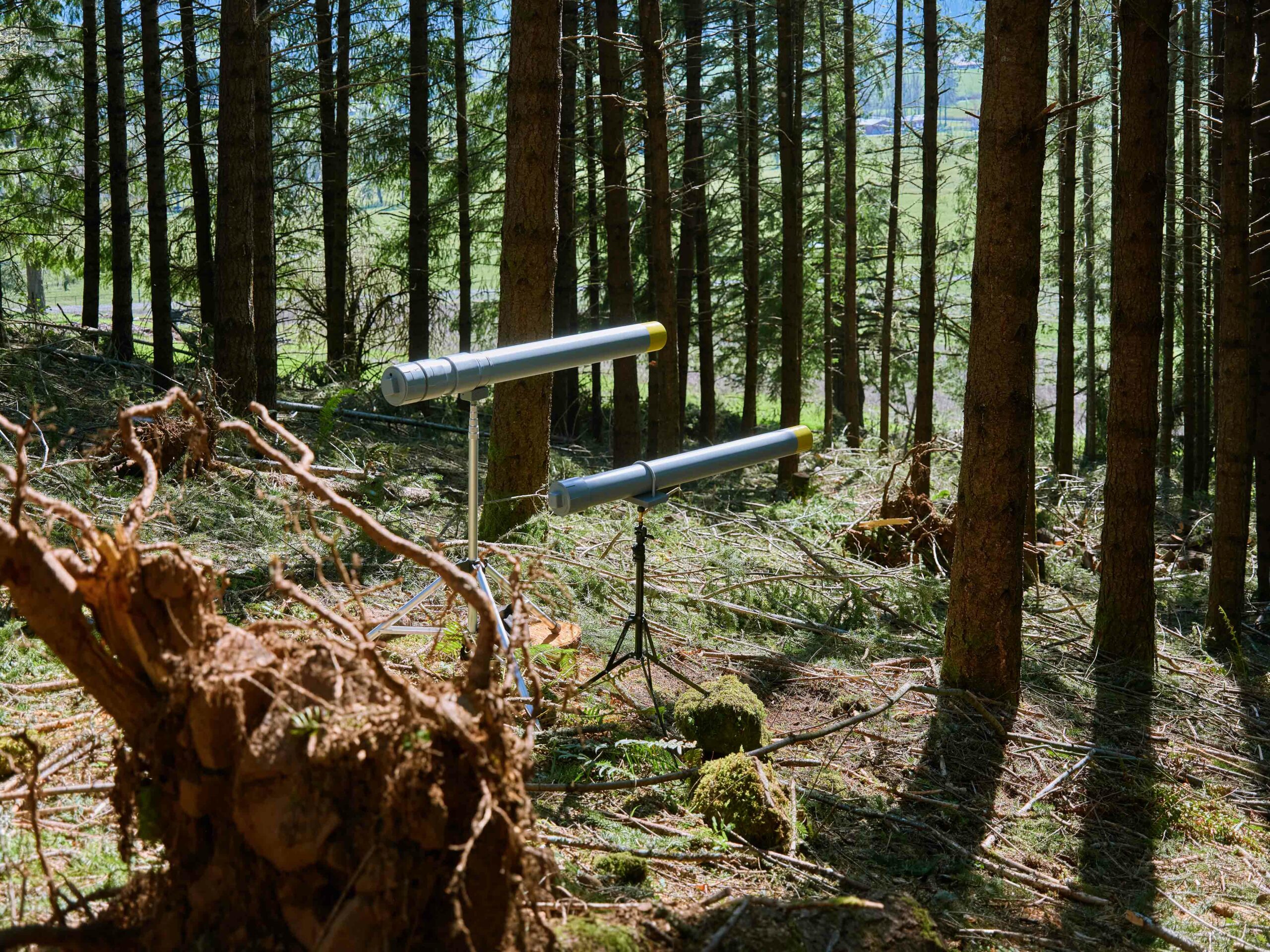
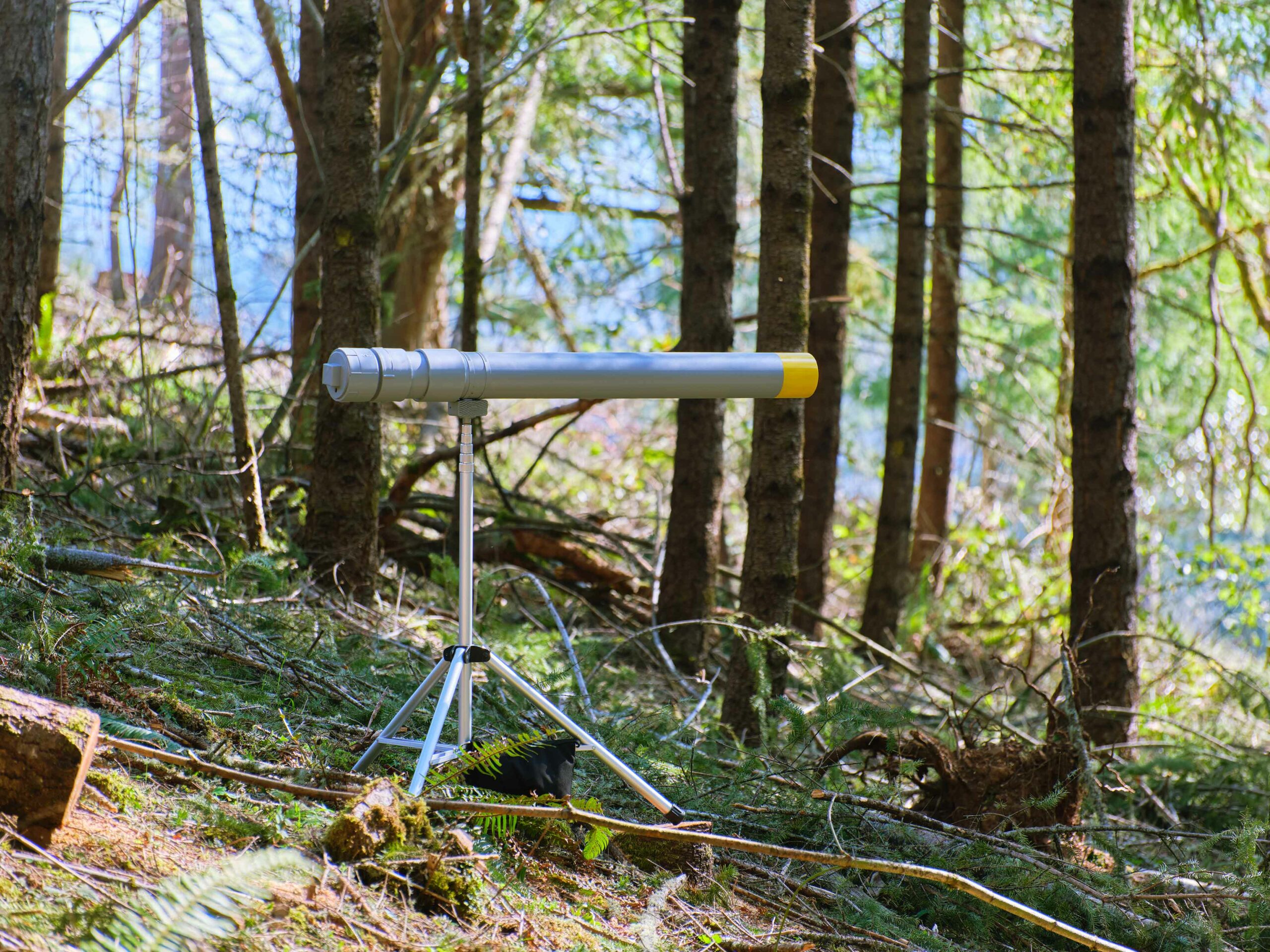
Sonic Solutions (2024) consist of working sound cannons made from PVC, metal, and wood. The two works are 4″-diameter PVC version (dimensions: 53” L x 24” W x 42” H) and 3″-diameter PVC version (dimensions: 43” L x 18” W x 36” H)
The sound cannons are a response to extractive industry practices that deploy sound cannons to deter migratory birds from landing on tailings ponds instead of changing their practices for healthy ecosystems. Sound is used as a blunt instrument, a weaponized force for controlling behaviors and habitats. Exhibition of works is April 5-21, 2024.
The documentation video shows the 4″ PVC version being fired using a denatured alcohol fuel.
The following is an imagined advertisement for the sound cannon targeting the extractive industry market.
Sacrifice Zones: Corporate Narratives
The Athabasca oil/tar sands in Canada are just one example of human-made sacrifice zones — a geographic area that has been permanently altered by environmental damage or economic disinvestment (Klein 2015). Over the years, tailings ponds in Fort McMurray, Canada have been a point of controversy for the oil extraction industry with the deaths of thousands of migratory birds, the ongoing risks to groundwater seepage, and the long-term impacts on Indigenous communities (He et al. 2024). Instead of changing practices for healthy ecosystems, oil companies now deploy air cannons to deter migratory birds from landing on tailings ponds. Consulting firms sculpt language to alter popular opinion. Sound is used as a blunt instrument, a weaponized force for controlling behaviors and habitats. Through silence and sound, I created four works that probe our relationship with the tar sands sacrifice zone — our reliance on oil & gas extraction and our reluctance to listen or act.

Stream Corporate Narratives on Spotify or your streaming service of choice.
Sacrifice Zones: Corporate Narratives, is one of the four installation works that explore how sound is used as a problematic “solution” to our destructive behaviors. Other works in the exhibition include a DIY air cannon, a set of DC motors pulling pins of shotgun primer trip alarms, and air cannon blast sound effects that interrupt the space at timed intervals over loudspeakers.
By using damaging sounds to cut over our manufactured din, we other the environment from our human recklessness, and slowly destroy ourselves in the process, one sonic blast at a time. Beyond the employment of air cannon blasts to “protect” wildlife, we use destructive sound levels elsewhere in extractive industries. Sonar pings in the ocean for exploration can reach 235dB, which is loud enough to kill a human and drive whales to beach themselves within a few miles (Scientific American; Discovery of Sounds in the Sea). How did we get to weaponizing sound for our extractive industries? Rather than listen carefully to sounds and their impacts on our habitats and the ecosystems we share, we outfit our human-made sound to meet the demands of an amplified world — loud sounds are ever increasing for oil exploration, military testing, and other raw material industries. Through imagined corporate ads, news story, and leaked memos, Sacrifice Zones: Corporate Narratives reviews a slice of oil & gas extraction — its processes and its policies.
I use commercial audio services (AI text to audio; royalty-free music) to deliver corporate-like deliverables that investigate the sacrifice zone in the Athabasca boreal region in Canada, known commonly known as Alberta’s tar sands.
The following is a track-by-track breakdown of Sacrifice Zones: Corporate Narratives
Syncrude Incorporated Promo
Syncrude Incorporated Promo is a satirically imagined ad for the real Syncrude Canada Ltd. company that runs mining operations in the Athabasca boreal region in Canada. “The mining and extraction process releases sulfur oxides, nitrogen oxides, hydrocarbons, and fine particulate matter into the atmosphere.” (NASA). The company mines bitumen (petroleum) and uses tailings ponds to hold by-products of the extraction process (CAPP).
2009 News Story, 1600 Birds Killed in Syncrude Tailings Pond
An AI voice reads text from the 2009 CTV Calgary news story, where 1606 birds were killed in a Syncrude Limited tailings pond in Canada. The story continues to highlight the companies deployment of air cannons to protect wildlife from the company-created tailings ponds and the risks of seepage. The several hundred thousand dollar fine mentioned in the story omits a comparison of impact to Syncrude Canada’s $432 million dollar 2009 net profit.
To put this in perspective, “an $800,000 fine would represent income from less than half a day of production for Canadian Oilsands Trust” (Dyer 2010).
Air Cannon Test Fire A-1001
The interjection of air cannon fire interrupts the narrative. These air cannon blasts are original sound design effects.
The Sonic Solution Air Cannon Ad
Using text from air cannon websites, like the Sonic Sentinel, I created a corporate ad for selling an air cannon targeted toward oil and gas companies.
Air Cannon Test Fire B-316
The interjection of air cannon fire interrupts the narrative. These air cannon blasts are original sound design effects.
2002 Luntz Research Companies Report to Republicans
Frank Luntz is a corporate and political consultant. His company conducts field research to find “words that move people to act on an emotional level” (PBS 2003). These words are used “to help his clients sell their product or turn public opinion on an issue or a candidate” (ibid.).
In 2002, there was a leaked report of Luntz Research Companies to the U.S. Republican Party (his then clients) on how to talk about the climate in order to sway public opinion. The section of the report is called “The Environment: A Cleaner, Safer, Healthier America.” An AI voice reads the eight points in the report. All spoken text comes directly from the report.
Air Cannon Test Fire C-456
The interjection of air cannon fire interrupts the narrative. These air cannon blasts are original sound design effects.
1998 American Petroleum Institute’s Memo for Climate Deception
The Kyoto Protocol, known commonly as the Kyoto Treaty was adopted in 1997. The Kyoto Protocol set “binding emission reduction targets for 37 industrialized countries and economies in transition and the European Union” (UNFCCC). The American Petroleum Institute delivered a memo the following year that laid out a plan to reach the media, the public, and policy makers with a message emphasizing “uncertainties” in climate science (NYTimes 1998). The underlying goal was to keep the status quo for fossil fuel companies to continue extractive industry practices and profits by sowing uncertainty in a variety of sectors (education, science, media, public).
For more background see Scientific American, or read the 8-page document.
Air Cannon Test Explosion D-914
The interjection of air cannon fire interrupts the narrative. These air cannon blasts are original sound design effects.
References
- Canada’s Oil & Natural Gas Producers (CAPP). “Oil Sands Tailings.” https://www.capp.ca/explore/tailings-ponds/ accessed March 24, 2024.
- CTV Calgary. “Over 1600 birds killed in Syncrude tailing pond.” CTV. March 31, 2009. https://calgary.ctvnews.ca/over-1600-birds-killed-in-syncrude-tailing-pond-1.384813
- Cushman, John H. “Industrial Group Plans to Battle Climate Treaty.” New York Times. April 26, 1998. https://www.nytimes.com/1998/04/26/us/industrial-group-plans-to-battle-climate-treaty.html
- Dyer, Simon. “Syncrude found guilty, but has justice been served?” Pembina Institute. June 25, 2010. https://www.pembina.org/blog/syncrude-found-guilty-but-has-justice-been-served
- Earth Talk. “Does Military Sonar Kill Marine Wildlife?” Scientific American. June 10, 2009. https://www.scientificamerican.com/article/does-military-sonar-kill/
- Frontline. “Interview: Frank Luntz.” PBS. 2003. https://www.pbs.org/wgbh/pages/frontline/shows/persuaders/interviews/luntz.html
- Klein, Naomi. This Changes Everything: Capitalism vs. the Climate. New York: Simon & Schuster, 2014.
- Megan He et al. Total organic carbon measurements reveal major gaps in petrochemical emissions reporting. Science 383, 426-432 (2024). DOI:10.1126/science.adj6233
- NASA. Earth Observatory: Athabasca. https://earthobservatory.nasa.gov/world-of-change/Athabasca
Cybernetic Classic

Composed and mixed by me in the box using Logic Pro X. Mastered by Thaddeus Moore at Liquid Mastering.
Stream on your favorite streaming service.
Purchase Cybernetic Classic on Bandcamp.