Pope Blackout is an indie-rock inspired outlet for electro-acoustic composer Jon Bellona. This three-song EP delves into emitting noise as art, and one can hear inspirations like My Bloody Valentine and Sonic Youth coming through the mix. When Jon is not modifying oscillators, the Pope is at the console.
Archives
Sound Pong
Sound Pong is a real-time performance composition written in Kyma and Max/MSP for an electronic ensemble. The eight channel piece was co-written by Jon Bellona and Jeremy Schropp for OEDO (Oregon Electronic Device Orchestra). The video is a recording of Feb. 27th, 2011 premiere. Performers: Jeremy Schropp, Jon Bellona, Nathan Asman, and Simon Hutchinson.
Download the Sound Pong source patches (Max, Kyma, and OSCulator). The zip file includes the audio files. @76 MB
Download the Open Source Wii interface (see alsoprojects#wiimote)@200 KB
Download the white paper documentation. @1.1 MB
Download the Sound Pong audio files. @72.3 MB
Sound Pong: An Interactive Exploration of Sound Space
Human Chimes
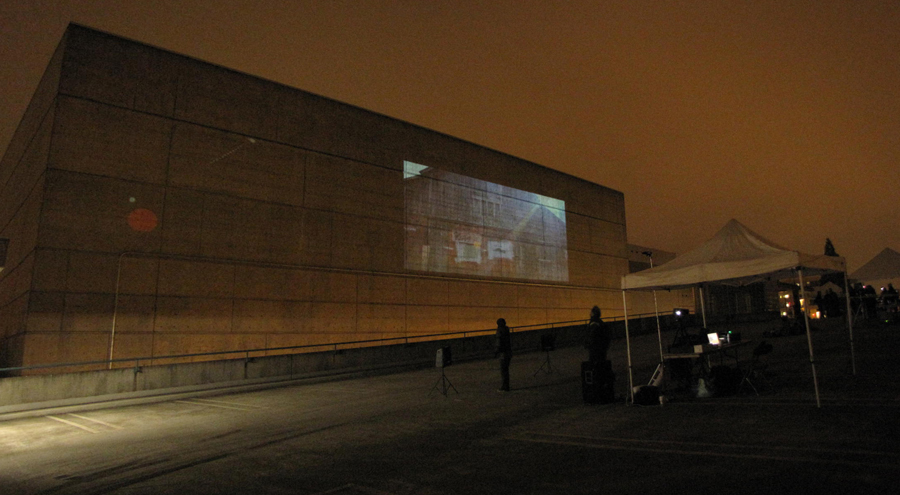
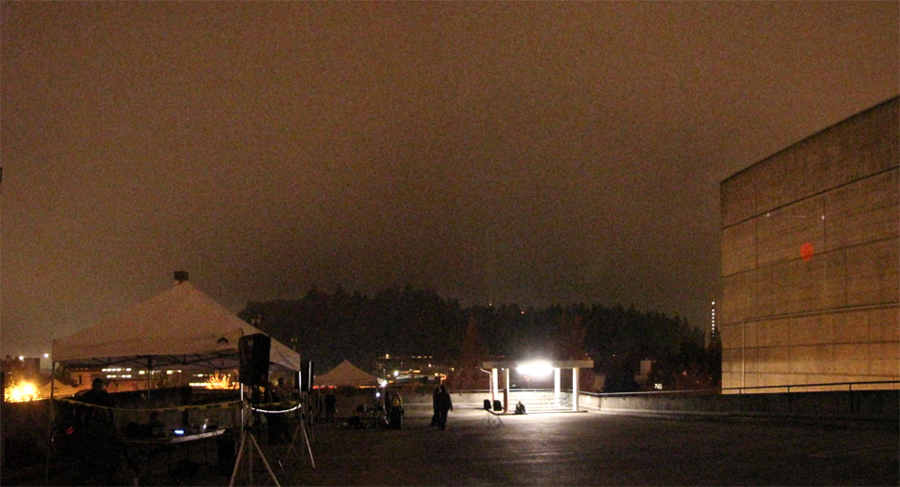
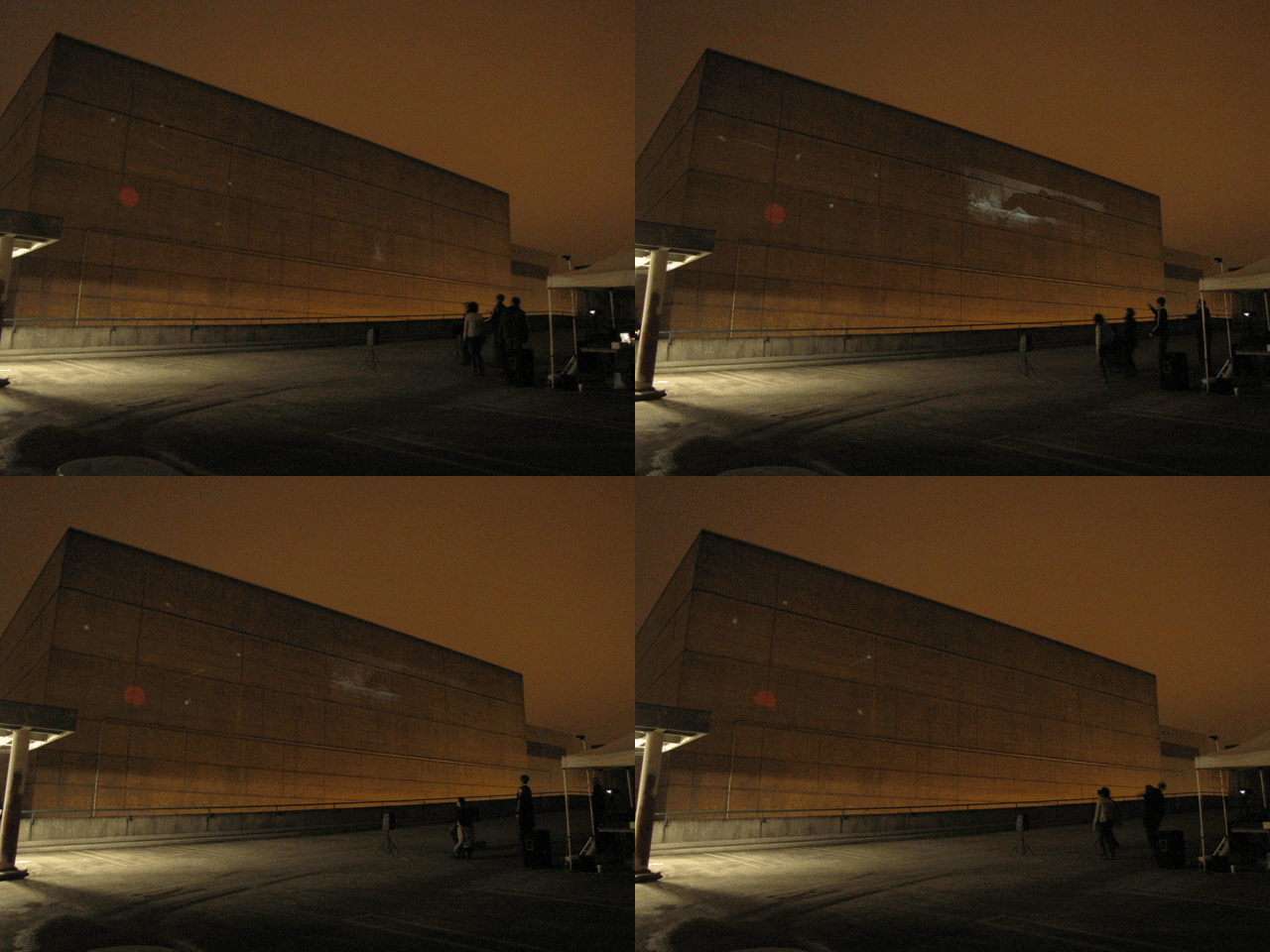
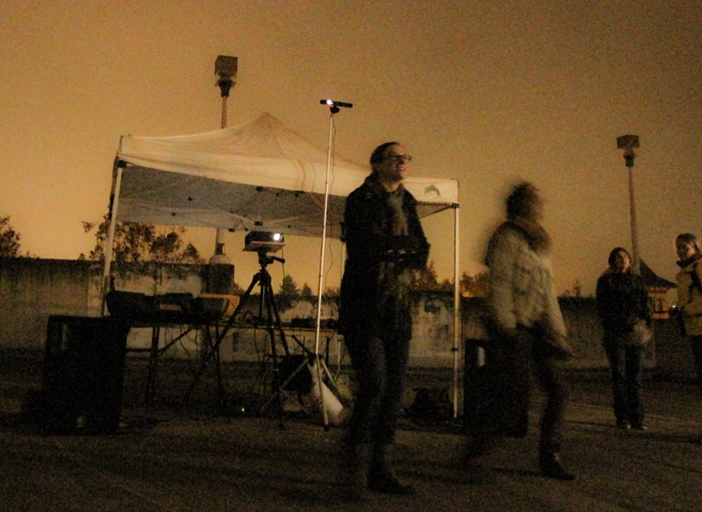
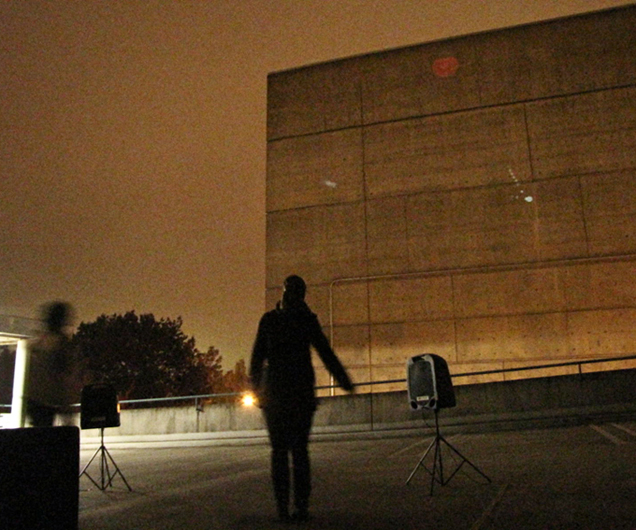
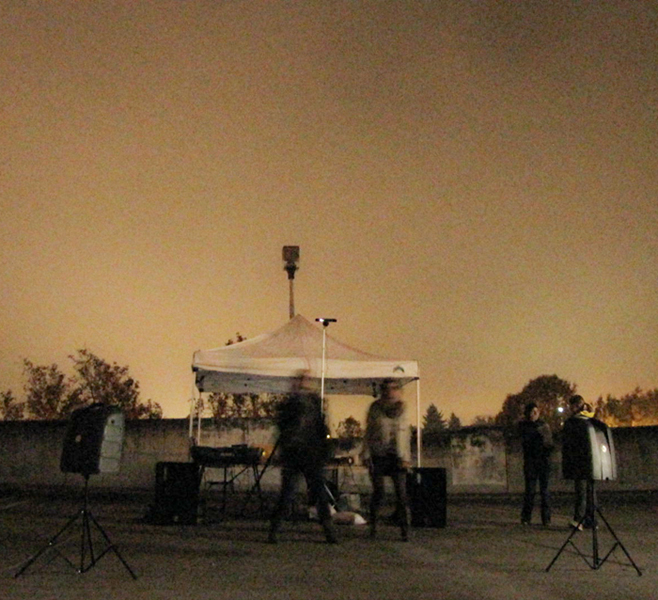
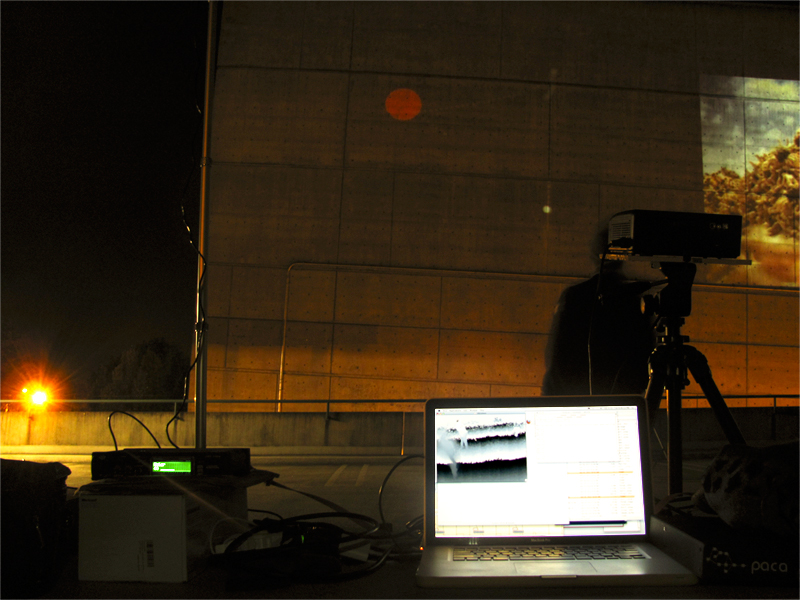
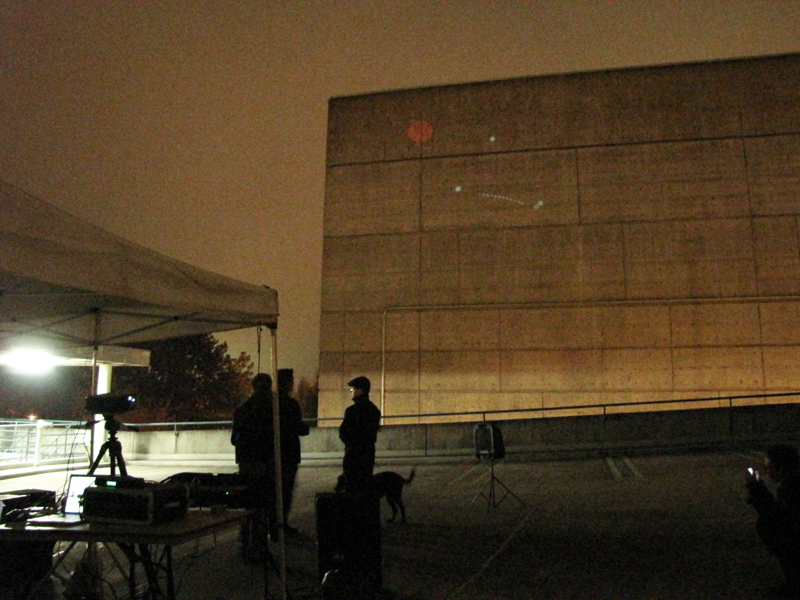
Human Chimes transforms users into sound that bounce between other users inside the space. The sounds infer interaction with all other participants inside the space. Participants perceive themselves and others as transformed visual components projected onto the front wall as well as sonic formulations indicating where they are. As people move, the sounds move and change to show changing personal interactions. As more users enter the space, more sounds are layered upon the existing body. In this way, sound patterns, like our relationships with others, continuously evolve.
The social work dynamically tracking users’ locations in real time, transcoding participants as sounds that pan around the space according to the participants’ positions. Human Chimes enables users to create, control, and interact with sound and visuals in real time. The piece uses a multimedia experience to ignite our curiosity and deepen our playful attitude with the world around us.
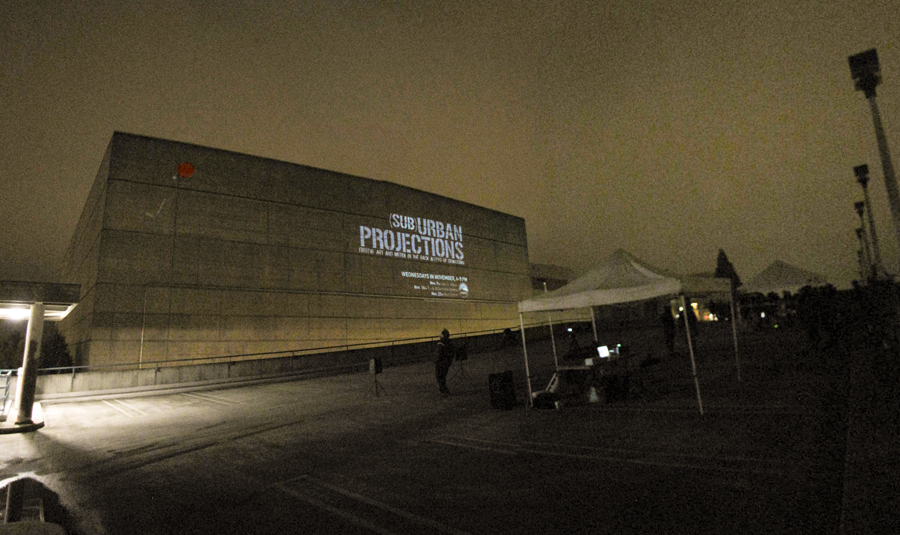
The work was commissioned in part by the University of Oregon and the city of Eugene, Oregon. The work was presented as part of the (sub)Urban Projections film festival: Nov. 9, 2011.


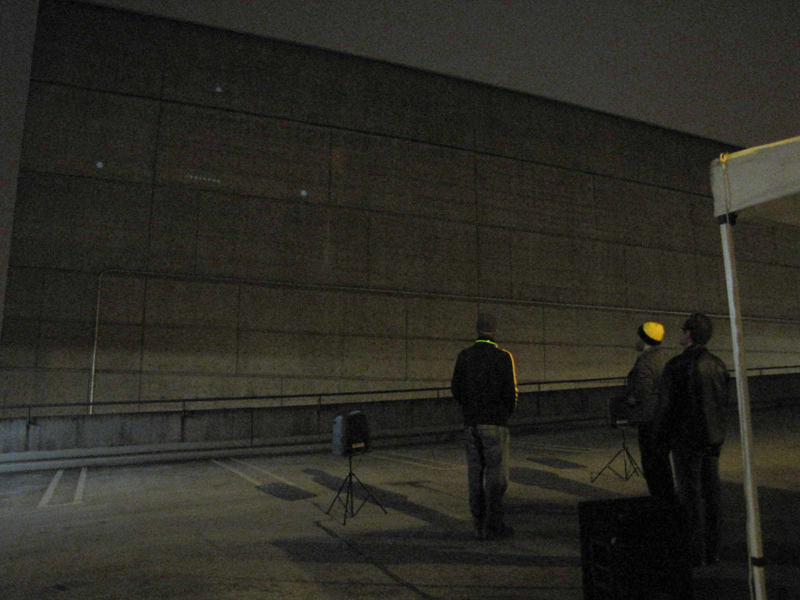
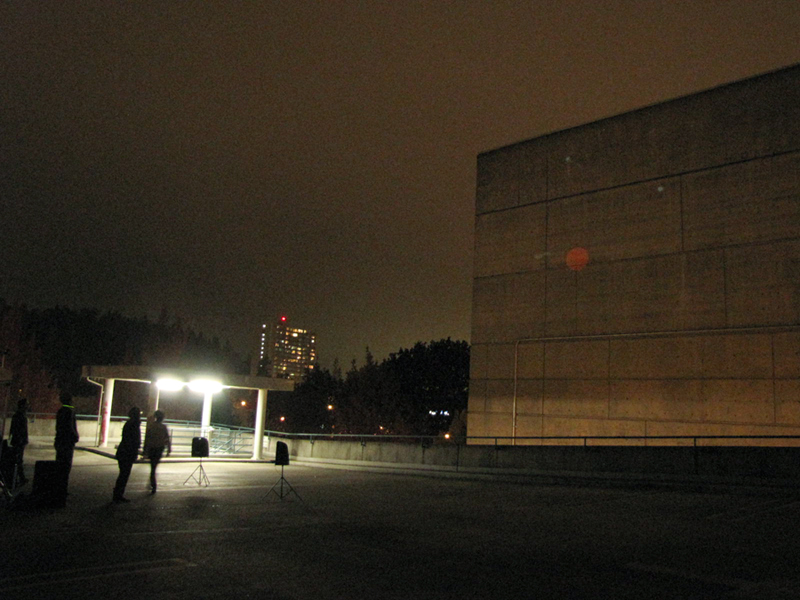
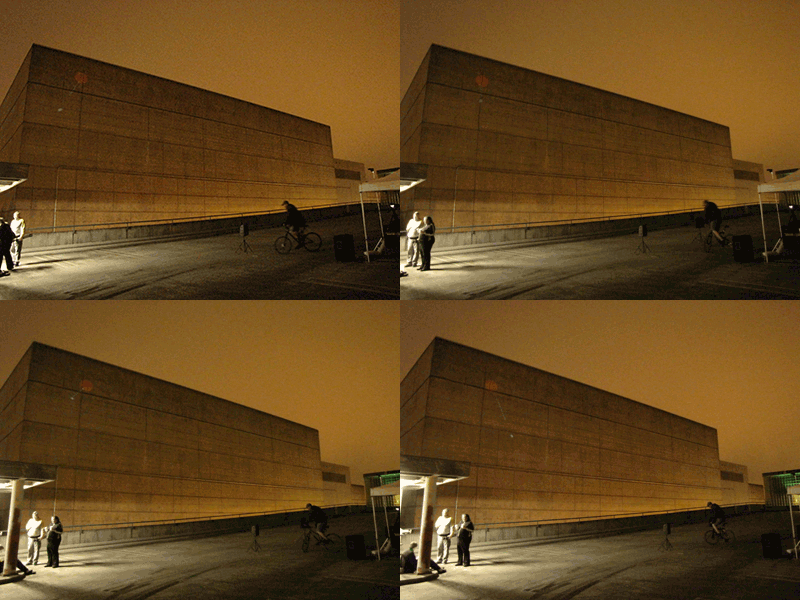
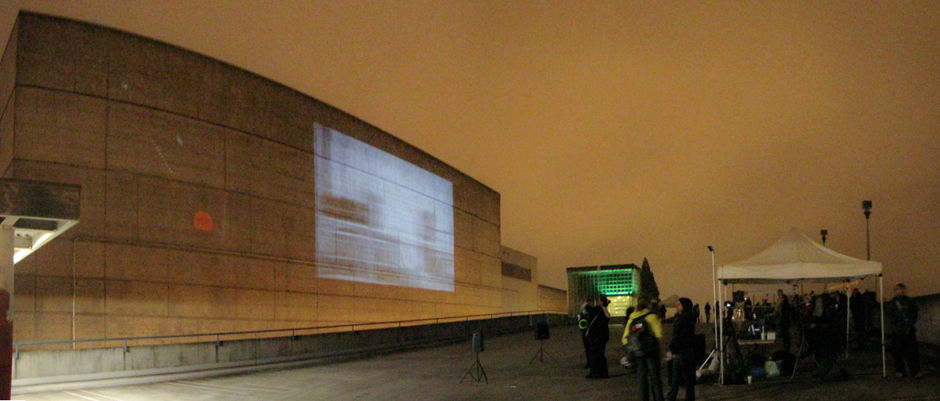
Graffiti
(sub)Urban Projections Film Festival wanted to include live projection bombing in downtown Eugene, OR, and I was commissioned to create an interactive installation that allows a user to paint graffiti upon any projected surface. The human interface uses TouchOSC on an iPad or iPhone, which drives my graffiti computer software. The work was presented each night of the (sub)Urban Projections festival: Nov. 9, 16, 23; 2011, the WhiteBox gallery in Portland, OR Dec. 10, 2011, and the second (sub)Urban Projections festival: Nov. 7, 11, 14 2012.
Running Expressions
Running Expressions is a real-time performance composition using bio-feedback and remote controllers. Written primarily in Kyma and Max/MSP, the piece captures live physiological data to create and control music within an 8-channel and video projection environment. The musical performance narrates a distance run, the psychological and emotional impacts of a running experience.
+ Download Documentation .pdf and the performance software (Max/MSP/Jitter, OSCulator, and Processing) files. (.zip, 11.5 MB)
+ Download Kyma performance audio files. (.zip, 45.3 MB)
+ Download Thesis documentation separately. (.pdf, 11.2 MB)
Running Expressions: Physiological Monitors and Motion Sensors Mapped for Musical Performance
Play! Sequence
Play! Sequence is a multimedia installation for iPod Touch, USB camera, and VGA video display and TouchOSC, Max/MSP/Jitter, and Isadora software applications. By creating a multitouch sequencer that controls the playback of audio and video masks, Play! Sequence enables the user to simultaneously interact with the space’s sonic and visual environment.
The iPod Touch provides a familiar language for the user and for the nature of the tactile interactions. The user is allowed to create, edit, and delete three synchronous sequences of sixteen steps, thereby changing the evolution and the complexity of the piece over time.
Each of the three sequences represent a sonic timbre and color mask that mirror the user’s actions. With each sonic timbre, the user has control over pitch, rhythm, and amplitude. The color masks follow the sounds across the screen, repeating from the left upon the start of each loop. The masks help visualize the user’s tactile and sound experience by revealing the user inside the space, and each mask represents one of elements in the RGB color model.
Play! Sequence operates within the framework of natural human interaction, playing off of our curiosity and our engagement with objects that we can creatively control. The user manipulates and interacts with the sounds and visuals in real time, driven by the immediate feedback that the system provides.
Kinect-Via- Interface Series
Kinect-Via- is a Max/MSP interface series for composers wanting to route and map user-tracking data from the XBox Kinect. The interface series complements four different OpenNI applications, namely OSCeleton, Synapse, Processing’s simple-openni library, and Delicode’s NIMate. All Max/MSP interfaces communicate using OSC (Open Sound Control) messages and are performance-ready, meaning that all routing and system options may be changed in real time. The Kinect-Via- interfaces offer a tangible solution for anyone wishing to explore user tracking with the Kinect for creative application. The interface currently has over 1000 downloads globally. Note: Tested with Max 5 and OSX 10.6.8.
Kinect-Via-OSCeleton. (.zip)
OSCeleton application
Kinect-Via-Synapse. (.zip)
Synapse application
Kinect-Via-Processing. (.zip)
Processing library
Kinect-Via-NIMate. (.zip)
NImate application
Projects utilizing Kinect-Via-
Human Chimes. Human Chimes is an interactive public installation. Participating users become triggered sounds that interact with all other participating users inside the space. The Kinect mapping is using Kinect-Via-OSCeleton.
The Beat. The Kinect user’s hand and head movements mapped to filters, and at times, hand gestures actuate sound. The Kinect mapping is using Kinect-Via-Synapse. “The Beat” is a composition by Nathan Asman.
Juggling Music (Arthur Wagenaar). Playing music by juggling with glowballs! Demonstration of this new self made musical instrument, controlled by juggling. Also known (in Dutch) as ‘De Kleurwerper’.