Tag Archives: multimedia

Defensible Space

Defensible Space is a large-scale artwork that explores the raw and elemental power, effect, and impression of wildfire on human beings, and the landscape that we exist in. The experience transports participants to immersive, serene, and natural landscapes of the west, interrupted by destructive wildfire events that play back fire sounds at the speeds of actual wildfires. The multimedia work combines 24-channels of immersive spatialized audio and 270 degrees of 3D projection mapping to envelop visitors in a multi-sensory experience of the fire front.

24-channel audio by Jon Bellona.
3D video projection mapping by artist John Park.

Housed in the Oregon State University Patricia Valian Reser Center for the Creative Arts (PRAx) Ray Theater, PRAx commissioned the artwork for the 50’x60′ space. The work was shown from March 31 – April 11, 2026.
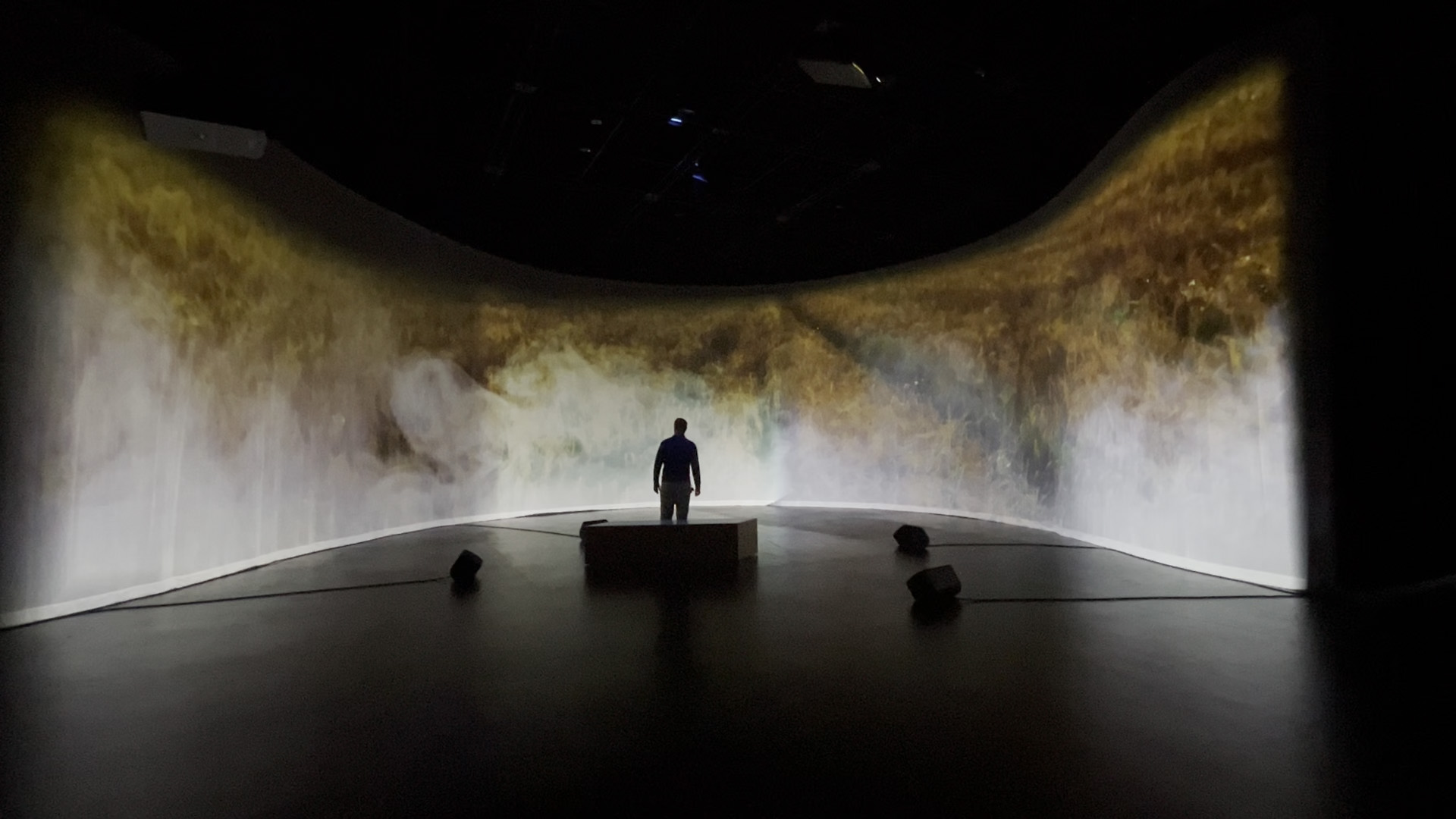
Defensible Space artwork showing curved scrim video projection of Pacific Northwest forest.

Technical details for audio and video: 24-channels of audio were 14 speakers on walls, 4 hung on the ceiling, 4 on the floor, and 2 subwoofers. The 90’ curved scrim (17’ tall) included 6000 x 1150 pixels image across 3 projectors (11000 lumen center. 8500 lumen projectors on sides). BrightSign media players were used for video playback and Max/MSP custom software played 24-channels of audio. Custom synchronization solutions came via custom software.

Defensible Space video excerpt showing a single viewer eclipsed by large video projection depicting a grassland wildfire.

Sacrifice Zones: S.O.S.

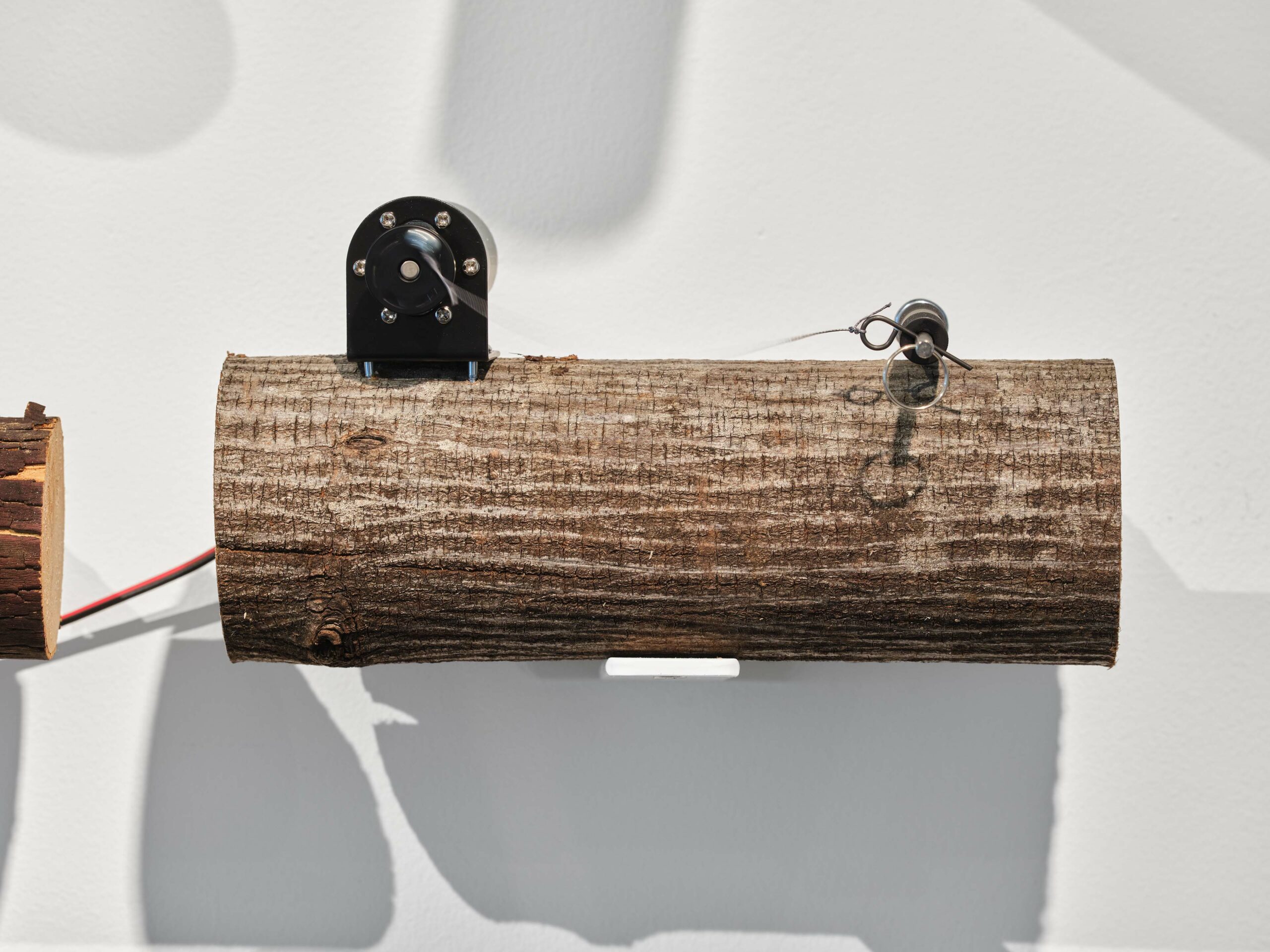
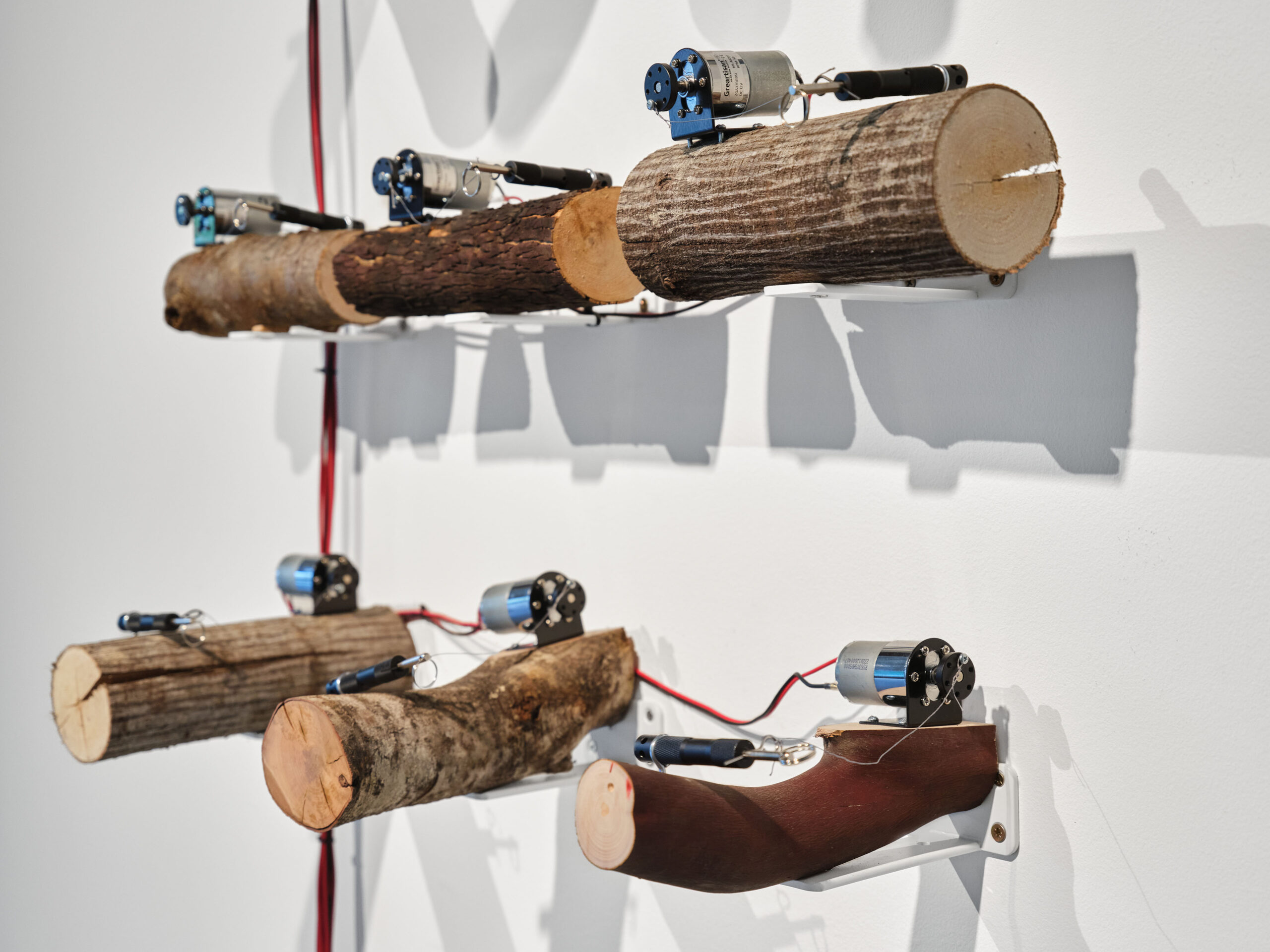
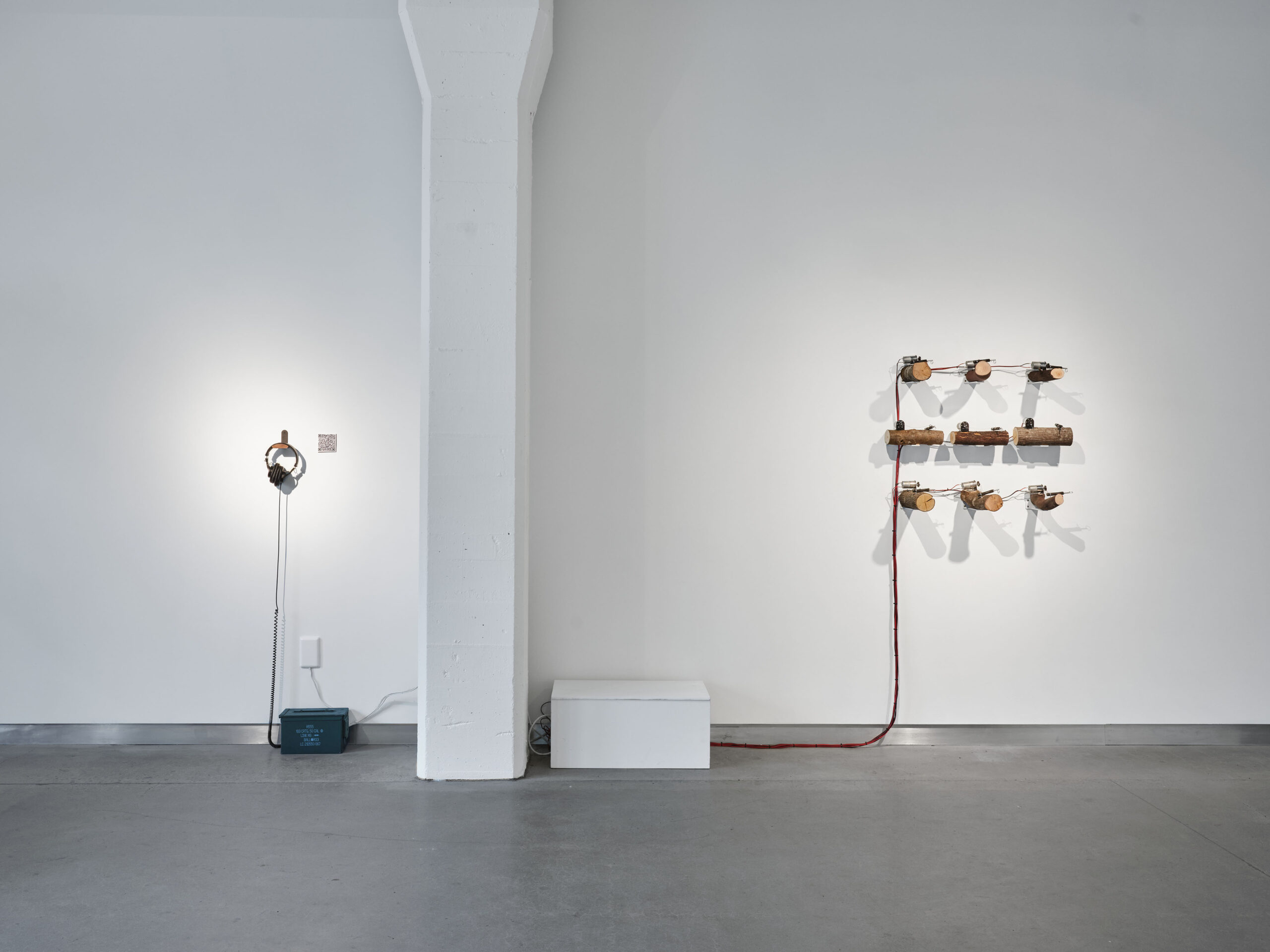
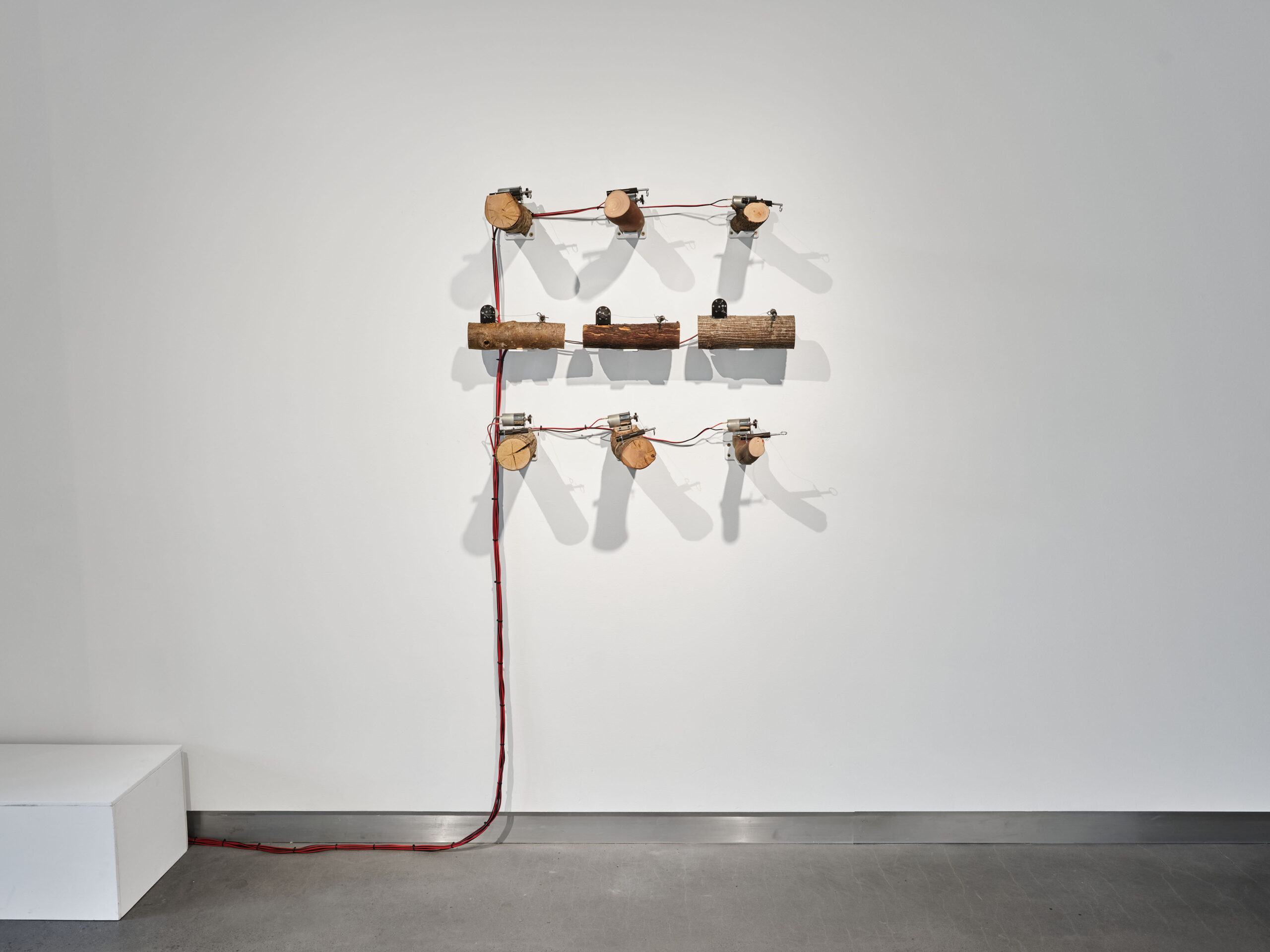
Consisting of nine DC motors, nine perimeter trip alarms, wood logs, and custom electronics, S.O.S. is a sound artwork that is a commentary on the Athabasca tar sands sacrifice zone; S.O.S. sounds our reluctance to listen or act on the destructive extraction methods of the oil & gas industry. DC Motors churn out an S.O.S. morse code distress call; the movements of which never quite activate the attached perimeter trip alarms. The distress call goes unanswered, speeding up to an eventual fever pitch before dissolving into a metronomic rhythmic pattern. These rhythms connote glossy artifacts of our reliance on bitumen byproducts, all of which are distractions to the methods of the extractive industry that permanently alter the environment.

The 2024 work was installed in 510 Oak Street, Eugene, OR as part of a Center for Art Research exhibition series Embrace Fearlessly the Burning World, organized by curators-in-residence Ashley Stull Meyers and Aurora Tang and made possible by the University of Oregon Department of Art’s Center for Art Research and the Ford Family Foundation. Photos by Adam DeSorbo.

10" wood log horizontal in center with DC motor resting on top left of log. Motor moving tied to a string that is connected to a perimeter trip alarm resting on top right of log.

Side view of three 10" logs against gallery wall. DC motors sit on top left of logs with perimeter trip alarms on top right of logs. The view shows 1/3 of sound artwork, S.O.S.

Right side view of six 10" logs against gallery wall. DC motors sit on top left of logs with perimeter trip alarms on top right of logs. The view shows 2/3 of sound artwork, S.O.S.

distant view of two artworks on gallery wall with lighting center on each artwork. On left is a pair of headphones resting on wall that is connected to 50-caliber ammo box on floor. On right are 9 wooden logs, DC motors and trip alarms with long red and black electrical cables zip-tied together coming down to floor and into a box in middle of floor.

View of sound artwork on gallery wall. The wall is a 3x3 grid of 9 wooden logs, DC motors and trip alarms with long red and black electrical cables zip-tied together coming down to floor. Electrical cable moves left along floor into a white box.